Record Spending and Party Divides Define 2026 Midterm Money Race
While Democratic candidates outraised rivals, Republican committees held a massive spending advantage that concentrated over 850 million dollars in Trump's strongest districts.
By Tyler Khalil ·
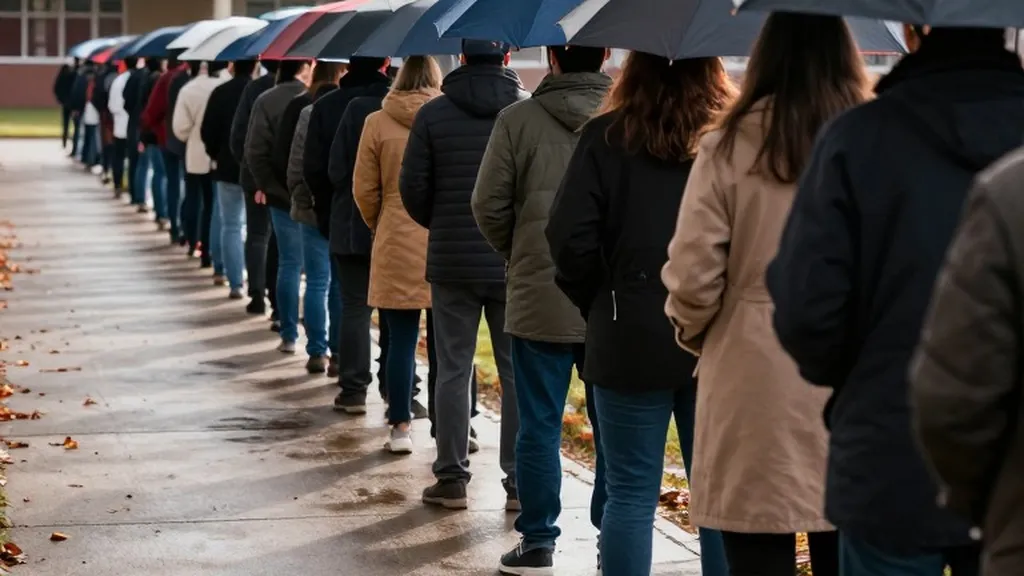
Voters across the nation are heading to the polls on Tuesday to decide the balance of power in Congress for the final two years of President Donald Trump's second term. As ballots are cast, the financial architecture of this midterm cycle has become a defining feature of the race. The 2026 elections are shaping up to be the most expensive in American history, a reality that underscores the high stakes of the day. The flow of money has not been uniform, however, revealing a complex landscape where party-level advantages do not always mirror candidate-level success.
According to an analysis of AdImpact data, Republican committees outraised and outspent their Democratic counterparts in the aggregate. This committee-level advantage was bolstered by significant contributions from Trump-affiliated groups and the tech billionaire Elon Musk. These external forces helped create a substantial war chest for the Republican side, allowing them to saturate specific markets with advertising. The disparity in total spending highlights the structural differences in how the two parties approach fundraising and deployment of resources in a high-profile midterm cycle.
A closer look at the data reveals a striking concentration of that Republican spending. The analysis indicates that 88.1 percent of all Republican general election television advertising went to states and districts that President Trump won in the 2024 election. This strategic focus was particularly intense in areas where his 2024 victory margin was ten points or more. In those specific districts, Republican advertisers spent more than 850 million dollars. This figure illustrates a defensive posture, as the party aimed to secure its base in territories where it held a clear historical advantage.
In contrast to the committee-level dynamics, the race at the candidate level presented a different financial picture. Democrats managed to outraise their Republican opponents when looking at the funds raised by individual candidates running for office. This suggests that while the overarching Republican party structure had more resources, Democratic candidates were able to generate strong grassroots support and individual donations. This candidate-level edge reflects the intense engagement of Democratic voters who are motivated by issues such as the cost of living and healthcare, which have been central to the political debate this year.
The allocation of funds has intersected with the political realities of redistricting. Six states are using new congressional maps following mid-decade redistricting, including California, Florida, Missouri, North Carolina, Tennessee, and Texas. Ohio also employs a new map for its elections. These changes have altered the landscape for candidates and committees alike, forcing them to adjust their spending strategies to account for shifted demographics and boundaries. The Republican strategy of pouring money into Trump-favorite districts appears to be a direct response to these new maps and the desire to protect incumbents in potentially vulnerable but historically safe areas.
The financial intensity of this election has not gone unnoticed by voters, many of whom are weighing the high cost of the political process against their own economic concerns. The Associated Press notes that the election is being viewed as a referendum on the administration, with many voters expressing frustration over high prices and an unpopular war with Iran. While the sheer volume of spending may not directly influence a single ballot, it shapes the narrative and the visibility of candidates in the final days before the vote. The contrast between the Republican committee surplus and the Democratic candidate surplus creates a multifaceted story of money in politics.
Elon Musk's involvement has been a particular point of focus for observers of the election's financial side. His contributions to Republican-affiliated groups added a layer of complexity to the fundraising efforts, distinguishing this cycle from previous midterms. The presence of such significant private wealth in the political arena has led to discussions about the influence of individual donors on the overall balance of power. For Democratic observers, the fact that their candidates outraised their opponents despite the committee-level deficit serves as a point of caution and optimism, suggesting that the base remains energized and willing to contribute.
The spending patterns also reflect the broader strategic goals of each party. Republicans are bracing for the possibility of losing the House and are fighting to hold the Senate, with one or two seats potentially tipping the balance in either chamber. The heavy investment in Trump's winning districts is a hedge against the midterm pattern, where the president's party typically loses seats. Democrats, meanwhile, are cautiously optimistic, relying on their candidate-level fundraising strength to compete in key battlegrounds. The interplay between these financial strategies and the actual voter turnout will determine the final outcome of this historic cycle.
As polling places open, the legacy of this expensive election will be measured not just in the number of seats controlled but in the financial precedents set for future contests. The 88.1 percent figure and the 850 million dollar expenditure in specific districts will serve as benchmarks for political analysts and strategists. The divergence between committee and candidate fundraising levels offers a nuanced view of the party dynamics at play. For now, the focus remains on the voters in the line, who are deciding the future of Congress while the financial records of this election are still being tallied and analyzed.
The Associated Press analysis of AdImpact data provides the clearest look at how money moved in this election. The numbers indicate a Republican committee edge that was heavily concentrated in areas of historical strength, while Democrats found their power in candidate-level fundraising. This split in financial advantage highlights the different tools each party used to compete. As the results from the 435 House races and 35 Senate seats begin to come in, the impact of these spending decisions will become apparent. The election is not just about who wins, but about how the resources of the two parties were deployed in one of the most costly political events in history.