Judges Block Federal Voting Moves as Postal Service Prepares for Mail Ballots
Federal courts have temporarily halted administration plans regarding noncitizen voting in Alaska and California, while the U.S. Postal Service expands operations to ensure timely ballot processing.
By Tyler Khalil ·
The legal landscape surrounding the 2026 midterm elections has become a central front in the fight for congressional control as federal judges moved to restrict executive branch actions on voting rules. A federal judge temporarily barred the Trump administration on Monday from implementing a plan designed to prevent noncitizen voting. Critics of the move argued that the administration's approach risked disenfranchising eligible voters and infringed upon the states' traditional authority over election administration. This temporary block provides immediate relief to state officials who were preparing to comply with federal mandates that many viewed as intrusive.
In a separate but related order, a judge instructed the administration to stop demanding that California election officials segregate ballots cast by individuals listed on federal rosters of suspected noncitizens. This ruling directly impacts how California, a state that relies heavily on mail voting, processes ballots on Election Day. The decision underscores the growing friction between the federal government and state election boards as they navigate new directives. Democratic leaders have long expressed concern that such federal interventions could lead to intimidation or confusion among voters, potentially suppressing turnout in key districts.
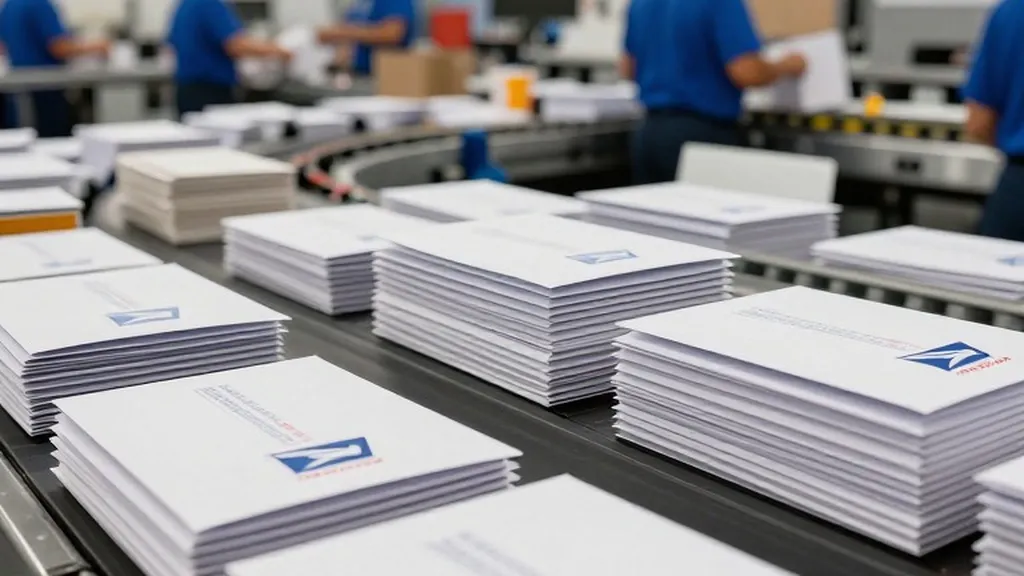
These judicial decisions arrive at a critical juncture for the U.S. Postal Service, which has announced significant operational changes to handle the expected surge in mail-in ballots. The Postal Service has added extra hours, increased staffing levels, and established special processing lines. These measures are intended to ensure that mail ballots are counted on time, a crucial factor in states where mail voting is the primary method of participation. The expansion of postal resources reflects the administration's acknowledgment of the logistical challenges posed by the high volume of early and mail-in votes.
The stakes of these administrative and legal battles are heightened by the competitive nature of the current midterm cycle. Ballotpedia indicates that Democrats need a net gain of three House seats to secure a majority, while Republicans can afford to lose no more than two. In the Senate, Democrats require a net gain of four seats to take control, a threshold that Republicans can withstand by losing only two seats. With 35 Senate seats and all 435 House seats up for grabs, every vote and every procedural hurdle carries significant weight. The outcome will determine which party controls Congress for the final two years of President Donald Trump's second term.
The Associated Press describes the election as a referendum on the president's second term, noting that voters are struggling with high prices and anger over an unpopular war with Iran. AP-NORC polling shows that 35 percent of U.S. Adults approve of Trump's job performance, while 25 percent approve of his handling of the economy. Approximately seven in ten adults say the country is heading in the wrong direction, with most blaming the president for rising costs. This sentiment is driving voter engagement, with more than 57 million people having already voted as of Monday, surpassing early vote totals from four years ago in many closely watched states.
Financial dynamics are also shaping the election, with the 2026 races likely becoming the most expensive in history. Republican committees have outraised and outspent their Democratic counterparts, aided by Trump-affiliated groups and Elon Musk. However, at the candidate level, Democrats have outraised their opponents. An AP analysis of AdImpact data reveals that 88.1 percent of Republican general election TV ad spending went to states and districts that Trump won in 2024, including over $850 million in areas where he won by 10 points or more. This spending strategy highlights the Republican focus on protecting incumbents in safe districts while Democrats concentrate resources on battleground areas.
Specific Senate races are drawing intense scrutiny due to their potential to tip the balance of power. In Alaska, the Trump administration filed a lawsuit related to the certification of the Senate result, adding another layer of legal complexity to the state's race. The state is currently rated as toss-up to lean Democratic by several major polling organizations. In Maine, Senator Susan Collins faces a competitive challenge from Troy Jackson, with the AP noting that economic strain and tariffs have made the state more competitive. These races, along with contests in Georgia, Iowa, Kansas, Michigan, Montana, Nebraska, New Hampshire, North Carolina, Ohio, and Texas, will be crucial in determining Senate control.
Governor races are also pivotal, with 36 governorships on the ballot. Republicans currently hold 26 governor's offices, while Democrats hold 24. Democrats hope to hold a majority of governorships for the first time in two decades, a goal that would signal a strong shift in political power. Key matchups include Georgia, where Rick Jackson faces Keisha Lance Bottoms, and Ohio, where Vivek Ramaswamy competes against Amy Acton. The AP identifies Texas, Florida, and Iowa as competitive governor races, with the outcomes potentially influencing the broader narrative of the election.
As polls remain open across the country, voters are casting their ballots in a climate of heightened tension and legal uncertainty. The temporary bars on federal voting initiatives and the expanded postal services aim to ensure a smooth transition of power, regardless of the final counts. The results of this election will not only decide the composition of Congress but also shape the oversight and policy agenda for the remainder of the Trump administration. With the courts and voting rules now central to the discourse, the focus remains on ensuring that every eligible vote is counted and that the will of the people is accurately reflected in the final tallies.