Lula Defies Historical Odds in Rio Ahead of Sunday's Runoff
With polls showing a dead heat, the president's campaign claims momentum after recent scandals hit his rival, while voters weigh in on public safety and democratic stability.
By Thiago Kovalenko ·
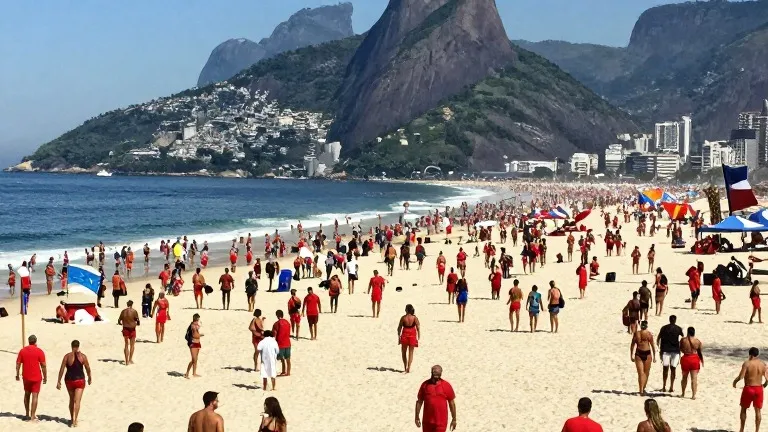
Supporters of Brazilian President Luiz Inácio Lula da Silva packed Copacabana beach in Rio de Janeiro on Saturday, seeking to alter the narrative before the final day of voting. The gathering aimed to provide momentum for the left-wing leader in a presidential runoff against far-right challenger Flávio Bolsonaro. Approximately 159 million Brazilians are eligible to cast ballots on Sunday.
The contest is statistically rare. Bolsonaro took the lead in the first round held on October 4, securing 47% of the vote compared to Lula's 45%. Historical data since the return of democracy in the 1980s shows that no candidate who lost the initial round has ever won the subsequent runoff. A victory for Lula would break that pattern.
Lula's campaign has gained traction in recent days following reports of scandals involving his opponent. Last week, the magazine Piauí reported that Flávio Bolsonaro attended a boat party with sex workers and vaccine lobbyists during the peak of the 2020 coronavirus outbreak. These allegations appear to have shifted the polls in Lula's favor, though most analysts still view Bolsonaro as the slight favorite.
For many voters, the election extends beyond standard political preferences. Jair Bolsonaro, the father of the current candidate, serves a 27-year prison sentence for plotting a coup after losing the 2022 election. Some democratic groups fear he may be released or return to power if his son wins. Press reports indicate that several of his co-conspirators could receive senior military and police appointments. Restaurateur Marta Moraes, 59, stated that her opposition targets Bolsonaro's political movement specifically, noting she lost four relatives due to pandemic management.
Bolsonaro's campaign emphasizes public safety, with the candidate pitching himself as a tough leader on violent crime. In Belo Horizonte, the capital of Minas Gerais state, thousands of supporters gathered in the Praça da Liberdade. The state holds the country's second-largest electorate and is considered a key indicator of presidential outcomes. Bolsonaro led there by nearly 5% in the first round. Backers argue that the former president's approach to gun laws and self-defense will be replicated, despite security experts noting that previous loosening of regulations often diverted firearms to criminal gangs.
Both sides mobilized heavily on the streets. Lula's supporters included members of a WhatsApp group with 10 million members, as well as individuals traveling from other cities. In contrast, Bolsonaro's backers in Minas Gerais waved Brazilian and US flags, highlighting the transnational appeal of his security platform. The final results will determine whether the presidency remains with the incumbent or shifts to the far right for the first time in this cycle.