Interior Ministry counts 980 arrests as French unions report 800,000 marchers
A week after chaotic unrest, police deployed 70,000 officers to contain daytime marches that turned into evening clashes in Paris, Marseille, and Lyon.
By Tyler Khalil ·
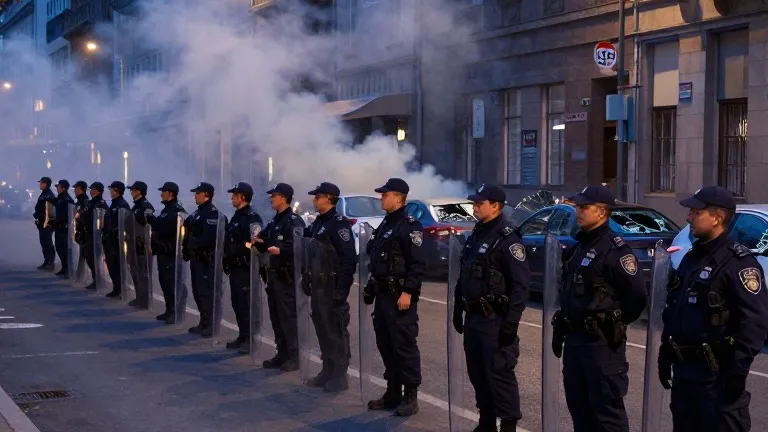
French Interior Minister Laurent Nuñez reported that nearly 1,000 people were detained on Saturday as nationwide protests against the cost of living and school conditions turned violent in the evening. The ministry’s final count stood at 980 arrests, a figure Nuñez said would likely increase. Two people were seriously injured during the disturbances, one in Toulouse and the other in Clermont-Ferrand.
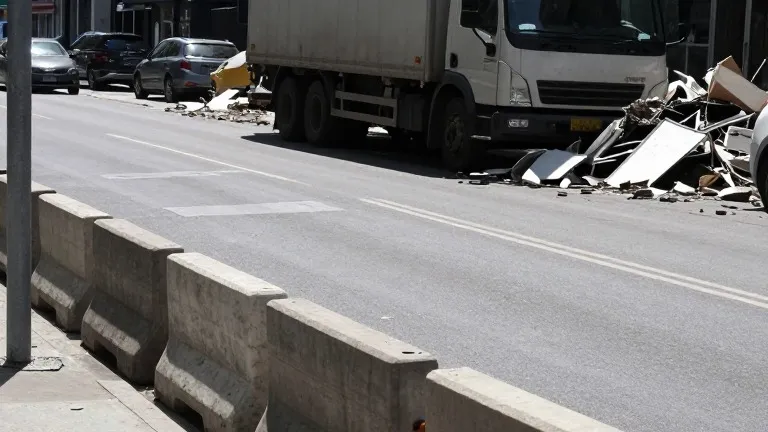
The day began with largely peaceful demonstrations that escalated into clashes in several major cities. Police in Paris used tear gas and water cannon to break up crowds near Porte de Vincennes. In Marseille, protesters set barricades on fire and blocked streets with metal sheets. In Bordeaux, onlookers watched as people tore wooden boards from a shop facade.
This marked the second consecutive weekend of major unrest in France. The previous weekend saw approximately 550,000 people march against fuel prices and living costs. That event resulted in more than 2,500 arrests and widespread looting. The Chambers of Commerce and Industry estimated that over 2,000 businesses were directly affected by damage amounting to hundreds of millions of euros. About 1,000 police officers were injured in the prior clashes, and one demonstrator lost a hand to a crowd-control grenade.
Authorities took a different approach on Saturday to prevent a repeat of the previous week’s chaos. They deployed 70,000 police officers and imposed movement restrictions in several cities. President Emmanuel Macron had issued a decree earlier in the week stating that only demonstrations organized by recognized trade unions would be permitted. In the days following the first weekend of riots, fast-track court hearings led to the jailing of hundreds of individuals for vandalism, arson, and looting.
Turnout estimates varied significantly between the government and labor groups. The interior ministry calculated that 410,000 people participated in the marches. The unions claimed the number was closer to 800,000. In Paris, the trouble started at the end of a march from Porte d'Italie. Police units, including an elite squad typically assigned to counter-terrorism, moved in as protesters built makeshift barricades.
Nuñez told reporters that several thousand radical activists had gathered at the rear of the Paris march. He specified that around 500 of these individuals were identified as rioters. Masked youths smashed the windows of a car dealership while police charged with batons. In Lyon, police fired tear gas into a crowd that had formed in an area the local prefecture had declared off-limits.
A protester in Lyon described the scene to reporters. The individual said there were about 150 people, mostly secondary school and university students. They noted that visibility was poor in the street due to the gas. In Paris, a 26-year-old protester named Zelie told the BBC that people were suffering a lot. She described the situation as having been too much for her community.
Two masked teenagers in Paris said their generation felt abandoned by the government. One of them acknowledged that looting was not ideal but blamed poverty and police violence. She said the protests would continue until their demands were met. Meanwhile, about 13,000 people rallied peacefully in Orléans to protest the hard-right National Rally party.
The unrest also spilled over into other European capitals. Riot police fired tear gas at anti-government demonstrators in Tirana, Albania. Clashes were reported in Brussels. In Milan, hundreds of soldiers and police blocked gathering points to prevent a repeat of the violence seen in France the previous week.
With presidential elections scheduled in six months, leading political contenders have placed blame on President Macron and his ministers for the unrest. The government faces pressure to address both the economic grievances and the public safety measures used to manage the crowds.