Trump's $5,000 Dividend Promise Now a Costly Legacy for GOP
Democrats hold both chambers after voters punished the party over the cost of living and the Iran war, leaving Republicans to navigate a trillion dollar pledge made in Dallas.
By Tyler Khalil ·
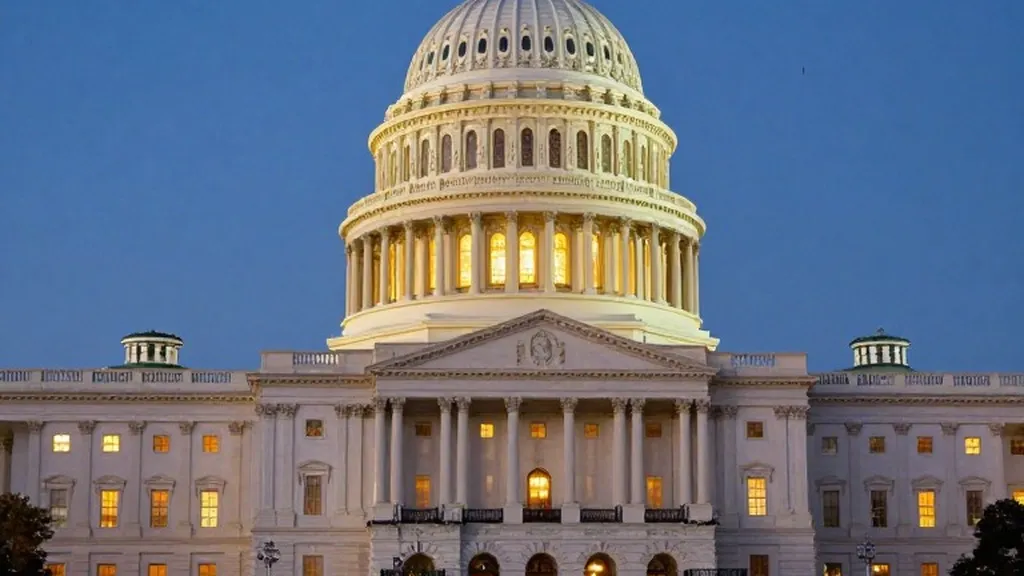
Voters delivered a decisive mandate for change in the 2026 midterm elections, stripping President Donald Trump's party of control over both chambers of Congress. As of the latest tallies, Democrats hold at least a 250-157 majority in the House and a 54-44 majority in the Senate. This shift in power complicates the administration's ability to execute the president's most controversial campaign promise: a $5,000 payment to every American adult, a check he branded the "Trump dividend." The pledge was made explicitly conditional on Republicans retaining power in Washington, a condition that no longer holds.
Trump unveiled the proposal at the Republican Midterm Convention in Dallas, addressing a packed arena with a direct appeal to the crowd. He stated that if the Republicans won the House and the Senate, citizens would win with them and receive the $5,000 dividend. The president framed the payment as a reward for the nation's economic success, comparing the government's distribution of cash to successful companies sending dividends to shareholders. He argued that the United States was generating unprecedented revenue, suggesting that the financial outlay was a manageable cost for a prosperous country.
The promise was not without immediate friction within his own party. Speaker Mike Johnson, who had been serving as House leader during the campaign, clarified the constitutional requirements for such a spending measure. Johnson stated that congressional approval is needed for the payments, describing the idea as creative but emphasizing that the legislative branch must act to make it law. He pledged to work through the process, noting that the House would have to find consensus to implement the president's big ideas despite the challenges of a slim majority.
Bipartisan criticism of the proposal emerged quickly, with many analysts and lawmakers questioning the funding source. Vice President JD Vance suggested that tariff revenue could help pay for the checks, but experts noted that the projected tariff income would not cover the full cost. The payment is estimated to cost between $1.2 trillion and more, depending on the exact number of eligible adults. This sum would significantly increase the national debt, which already stands near $1.8 trillion annually in deficit, raising concerns about inflation and long-term fiscal stability.
Fact checkers and financial experts have labeled the promise as far from certain. PolitiFact noted that the biggest payment in the administration's recent trio of promised payouts faces enormous obstacles. The White House has not released a formal plan for how the money would be distributed or exactly who would qualify, beyond the general description of adult citizens. Some estimates suggest the cost could consume almost all the revenue from new tariffs over a decade, a timeline that does not align with the immediate expectations of voters who supported the payment.
The election results suggest that voters were skeptical of the administration's handling of the economy. Polls conducted before the vote indicated that a large majority of Americans felt the economy was poor or not so good, with inflation causing severe financial hardship for households. The cost of living and government corruption were cited as crucial issues by voters, often outweighing other concerns like immigration. This sentiment contributed to a wave of Democratic victories in traditionally Republican states, including Georgia, where Keisha Lance Bottoms was elected as the state's first Democratic senator in decades.
Democrats are now positioned to scrutinize the administration's spending priorities in the coming months. With control of both the House and Senate, the new leadership can delay or block legislation, including any bill to fund the dividend. Richard Neal, a Democrat expected to lead the Ways and Means Committee, has already signaled his intent to reverse what he calls unjustified tariffs and backroom trade deals. This legislative stance puts the $5,000 promise in a precarious position, as the revenue source cited by the White House is now a primary target for Democratic reform.
The contrast between the campaign rhetoric in Dallas and the reality of the new Congress highlights the political risk taken by the president. By tying a major financial incentive to the midterm outcome, Trump attempted to energize the base, but the strategy backfired as the party lost seats across the country. The loss of the House majority, which Republicans had held since 2023, means that the speaker and committee chairs will no longer be from the president's party. This structural change provides Democrats with the tools to demand hearings and oversight on how the administration plans to manage the budget.
The dividend promise also adds to a pattern of unfulfilled financial pledges from the administration. Previous promises, such as the $2,000 tariff dividend and the DOGE dividend, did not materialize into cash in the hands of voters. The $5,000 check now joins that list of aspirational policies that may serve more as campaign slogans than legislative goals. As the new Congress convenes in January, the pressure will be on both parties to determine whether the dividend becomes a line item in the budget or remains a symbolic victory for the president's campaign strategy.
For now, the $5,000 dividend stands as a testament to the bold, if risky, tactics employed by the Republican Party in 2026. The election results have shifted the balance of power, giving Democrats the authority to challenge the administration's spending plans. The coming sessions will reveal whether the president's promise was a strategic move to win votes or a fiscal gamble that the new Congress will be forced to address. The final outcome will depend on the willingness of both parties to negotiate a path forward in a divided government.