Agility Robotics Lists on Nasdaq, Offering Rare Financial Data on Humanoid Costs
The Salem, Oregon-based firm becomes the first dedicated humanoid robot maker to go public in the U.S., revealing that its rental fees align with standard human labor rates.
By Jason Kovalenko ·
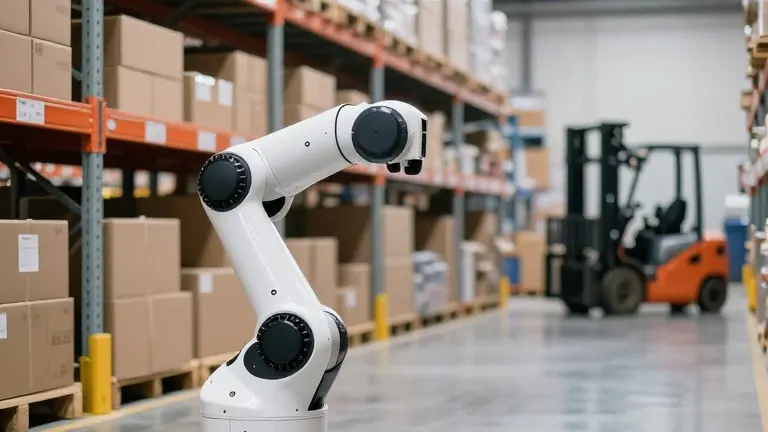
Agility Robotics began trading on the Nasdaq exchange on November 5, 2026. This move makes the Salem, Oregon-based company the first dedicated developer of humanoid robots to become publicly traded in the United States. The listing follows a strategic merger with a special purpose acquisition company, which required the firm to release detailed financial disclosures.
The company's securities filing provides specific details on the cost of operating its robots. Jonathan Hurst, co-founder and chief robot officer, stated that rental rates are comparable to standard human labor costs. This pricing model is designed to show customers a return on investment from the first day of use. By renting units rather than selling them, Agility argues it reduces financial risk for clients.
The firm acknowledges that its technology is less proven than traditional industrial robots. The filing notes that industrial machines have decades of track records in factories and warehouses, while humanoid robots have not yet achieved widespread commercialization at scale. Agility holds a distinct position in this emerging market, having been the first to achieve full-time commercial deployment of humanoid robots at a customer warehouse in 2024.
Current deployments of the Digit humanoid robot include the logistics warehouses of GXO. The robots also operate at the South Carolina manufacturing facility of Schaeffler, a German automotive parts maker, and at production lines for Toyota Motor Manufacturing Canada. These sites demonstrate the robot's use in high-profile industrial environments, distinguishing Agility from many privately held competitors.
GXO, Agility's first customer, announced plans to expand the use of Digit robots beyond their initial deployment in a Georgia warehouse. The logistics firm intends to roll out the technology to additional facilities in North Carolina and Tennessee. This expansion signals that the customer views the platform as reliable for complex logistics operations.
As a public entity, Agility must disclose operational metrics that most of its private competitors keep internal. These filings offer a benchmark for the unit economics of humanoid robotics. Investors can now review how the company plans to build a sustainable business around automating manual labor.
The company faces increased scrutiny following its transition to the public markets. Observers will monitor whether Agility can scale its operations while maintaining the financial viability outlined in its recent disclosures. The firm's ability to convert early commercial successes into long-term profitability will determine its position in the growing market for physical AI and automated labor solutions.
More Business · National news · Rip-Off Report · Report a business · Got a Story?