Three days of dread: Iran blames US for deal collapse
Tehran assigns responsibility for the failed interim agreement to Washington while warning that any renewed military engagement will invite a disproportionate counterattack.
By Jason Kovalenko ·
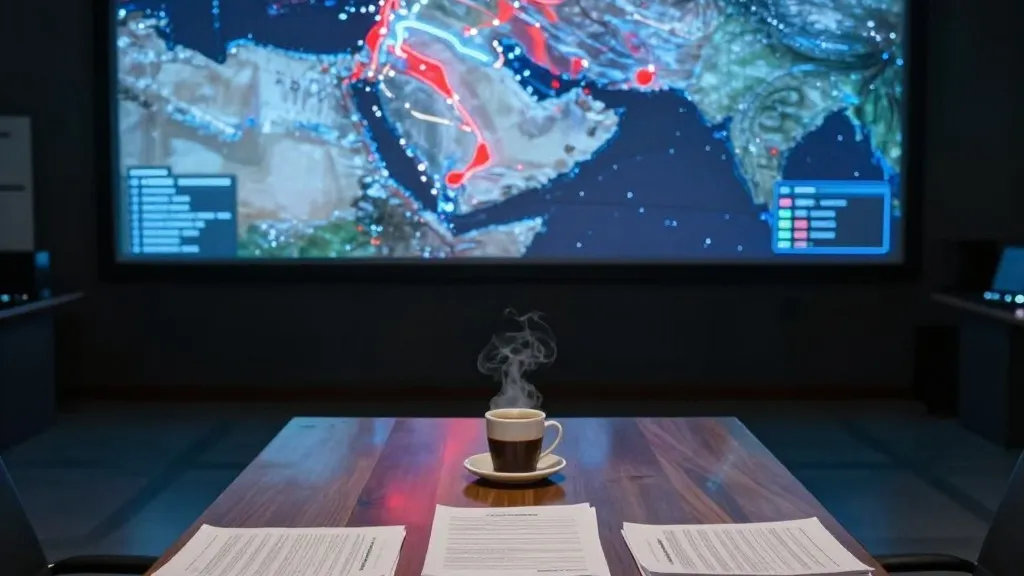
The threat of renewed combat is poised to return within seventy-two hours. This timeline follows the unraveling of the interim agreement designed to halt hostilities between the United States, Israel, and Iran. The central tension now revolves around whether diplomatic efforts can be salvaged before kinetic operations resume this coming weekend.
President Masoud Pezeshkian addressed the breakdown during a broadcast on Iranian Press TV this past Saturday. He placed the burden of the failed negotiation squarely on the shoulders of the White House. However, he simultaneously urged both parties to return to the table and finalize the remaining terms of the accord. These statements arrived as anxiety mounted regarding potential new strikes. President Donald Trump indicated on Friday that he might execute another phase of the operation, referencing the campaign codenamed Epic Fury, which initiated the conflict on February 28.
Security officials in Tehran have issued stark warnings regarding the consequences of further aggression. The Islamic Revolutionary Guard Corps stated that even limited attacks would provoke a response several times more powerful, according to reports from the semi-official Fars News Agency. Ali Abdollahi, the Chief of Staff for the Iranian Armed Forces, reinforced this stance on Saturday. He declared that American forces would be barred from the Gulf region at all times. Abdollahi characterized any expectation of U.S. naval presence as a fantasy that Trump would carry to his grave.
Political pressures in both the West and the Middle East are shaping the leaders' calculations. While Trump contemplates further military moves, Israeli Prime Minister Benjamin Netanyahu continues to advocate for a regime change in Tehran. Both figures face significant electoral hurdles. Israeli voters are set to select their next government on Tuesday. In the United States, the Republican Party confronts pivotal midterm elections on November 3. A potential Democratic sweep of both the House and Senate would represent a substantial setback for Trump, who retains over two years in his final term.
Fatemeh Mohajerani, the Iranian government spokesperson, clarified the nation's defensive posture on Saturday. She emphasized that Tehran would not seek external approval to protect its sovereignty. Mohajerani noted that while the country pursues peace, it will react to any aggression with severe repercussions. In a written memo, she asserted that Iran neither avoids dialogue nor hesitates to defend itself. She warned that those believing they can dismantle the nation need to reassess their strategies.
High-level consultations are continuing within the Iranian leadership. Gholamhossein Mohseni Ejei, the head of the judiciary, met with Supreme Leader Mojtaba Khamenei to discuss corruption and compensation for war-affected citizens. Khamenei ascended to the supreme leadership position following the assassination of his father during the initial strikes of the war. He has remained out of the public eye since taking office in early March. Parliament Speaker and lead negotiator Mohammad Bagher Ghalibaf was also reported to have met with the Supreme Leader earlier this week.
The diplomatic window remains narrow but open. While the military rhetoric has intensified, the stated desire to conclude the interim deal suggests that a resolution is still being sought. The next few days will likely determine whether the conflict pauses again or escalates into a new chapter of the war that began in late February.