Tesla Narrows Unsupervised FSD Promise to Limited Robotaxi Zones for 2027
The automator’s AI chief clarified that owner-driven autonomous features will only function within existing managed fleet geofences, marking a shift from the original 'anywhere' pitch.
By Aever Bundji ·
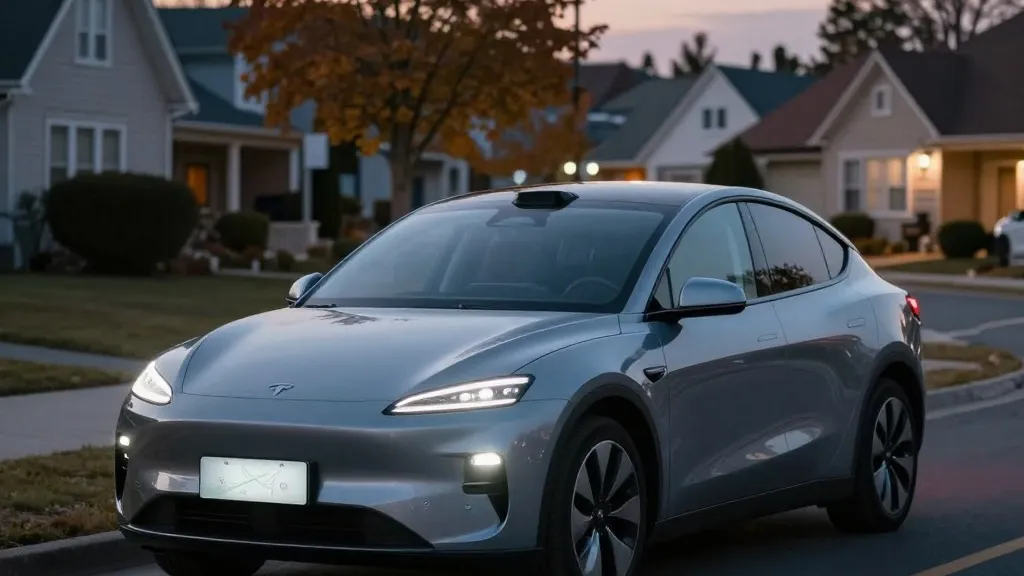
Tesla has officially targeted the second quarter of 2027 for the rollout of unsupervised Full Self-Driving in customer-owned vehicles, a timeline that follows a decade of shifting promises. However, during the company’s third-quarter 2026 earnings call, AI chief Ashok Elluswamy revealed a significant limitation: the feature will not grant owners unrestricted autonomous driving capabilities. Instead, the system is designed to allow private vehicles to integrate into Tesla’s existing managed Robotaxi network, meaning the technology will only function within specific, pre-defined service areas.
The clarification addressed a top question from retail shareholders, who had submitted inquiries backed by approximately 1.1 million shares regarding the availability of unsupervised FSD. Elluswamy described the initial rollout as a process where owners add their vehicles to the company’s operational fleet. This approach differs substantially from the original marketing pitch, which suggested that a software update would eventually enable cars to drive themselves to any destination without human intervention.
Currently, Tesla’s Robotaxi service operates in six metropolitan areas in the United States, but the coverage is geographically restricted. In Miami, for example, the service area primarily covers West Miami and a corridor toward Doral and Sweetwater. Similar small geofences were established in Orlando and Tampa in July. Within these zones, the vehicles adhere to low-speed routes, generally avoid highways, and steer clear of complex urban environments to ensure safety.
Regulatory hurdles further complicate the picture, particularly in the Bay Area. Despite being a key market, the region does not yet support unsupervised operation due to California regulations. The state requires a safety driver in every vehicle unless the manufacturer releases specific data to the California DMV, a step Tesla has avoided to maintain its current classification. Consequently, the unsupervised promise does not apply to this region under the current operational model.
Fleet scale remains a factor in the rollout strategy. Tesla reported reaching nearly 2 million cumulative unsupervised miles by the end of the third quarter of 2026, a milestone achieved shortly after the Cybercab model joined the Austin fleet. However, third-party tracking data from earlier this year indicated that only dozens of fully driverless Teslas were on the road, a figure far below the hundreds of thousands previously envisioned by CEO Elon Musk. Competitor Waymo had already established a presence in Orlando and Tampa before Tesla’s entry, accumulating over 3 million miles of operational data.
The new timeline follows a series of previous announcements that have set expectations for a broader release. In July 2025, Musk stated that unsupervised personal use would be available in certain geographies by the end of that year. A year prior to that, he expressed confidence that Tesla would achieve unsupervised self-driving within the following year. Owners of hardware version 3 vehicles, who purchased FSD expecting these capabilities, have been informed that their current hardware cannot run unsupervised FSD, with no definitive upgrade path provided.
The shift represents a narrowing of the product definition from a universal autonomous feature to a localized fleet integration. Owners will not be able to use the system for long-distance highway trips or cross-town commutes unless they reside and work within one of the designated zones. Elluswamy identified safety as the primary bottleneck, suggesting that the current restrictions to low-speed roads are a precautionary measure. He projected that these safety concerns might be resolved by next year, though he acknowledged the uncertainty of the timeline.
The development underscores a gap between the original sales pitch and the current operational reality. For years, customers were led to believe that FSD would evolve into a fully autonomous driving capability via software updates. The Q2 2027 target, while specific, applies only to a constrained environment where Tesla controls the operation. This approach allows the company to manage risk while testing the integration of private vehicles into its commercial fleet, setting the stage for a potentially broader release in the future.
As Tesla moves forward, the focus remains on refining the safety metrics that currently limit the service area. The company’s strategy appears to prioritize controlled expansion over rapid, widespread deployment. For investors and consumers, the Q2 2027 date serves as the next major checkpoint, but the scope of the feature remains significantly more limited than the initial vision of a car that drives itself anywhere.
Source: Electrek