NASA shifts docking to Earth orbit to keep 2028 moon landing
The agency moved the Starship connection to high-Earth orbit after SpaceX engineers flagged issues with the previous lunar trajectory.
By Thiago Kovalenko ·
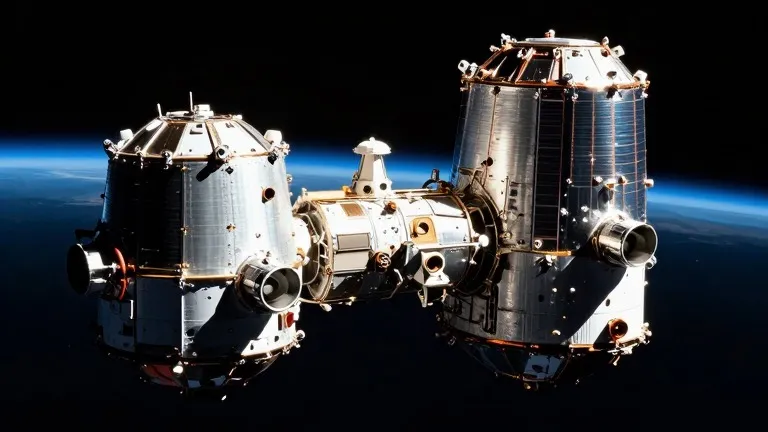
NASA confirmed on Friday that a crewed landing on the Moon could happen as soon as 2028.
The agency outlined a revised architecture where the Orion spacecraft docks with SpaceX's Starship in high-Earth orbit. Under the previous plan, these two vehicles were required to connect in a near-rectilinear halo orbit around the Moon. SpaceX engineers requested the change during meetings in early 2026, citing that the old orbit demanded more energy and created additional difficulties. NASA canceled the Lunar Gateway earlier this year, which removed a key constraint for SpaceX and allowed for the simplification.
Blue Origin's approach remains distinct from the SpaceX model. The company plans four launches of the New Glenn rocket, with no refueling of one spacecraft from another. The Blue Moon lander may meet Orion in low-lunar orbit, a configuration that differs from the high-Earth orbit docking used for Starship.
NASA officials stated that Artemis III is still targeted for summer 2027. This mission will serve as a demonstration where Orion docks near Earth with both the Blue Moon and Starship vehicles. Artemis IV, which includes the actual surface landing, remains scheduled for 2028.
NASA Administrator Jared Isaacman expressed confidence in the timeline during the news conference. He stated, "This is an achievable path we are on right now. We have the mandate, we have the resources, and the support from our stakeholders to be able to execute, and that's what we intend to do." The agency's leadership has reviewed every element of the program to help lander companies speed up their work.
This presentation marked the first time NASA publicly described the full scope of these architectural changes. While much of the underlying information had been reported previously, the agency openly acknowledged that the mission structure has shifted in substantial ways. The open question remains whether NASA and its partners can maintain the announced dates.