Lebanese Shi'ite Survey Finds Majority Backs Transfer of Hezbollah Weapons to State
A recent poll indicates that a substantial portion of Lebanon's Shi'ite community would prefer the nation's military to manage security and armaments rather than the armed group itself.
By Thiago Kovalenko ·
A survey focused on Lebanese Shi'ites has revealed a significant preference within that demographic for the transfer of Hezbollah's military capabilities to government control. The results were publicized by Israel's public broadcaster KAN and the Lebanese website Kataeb.org following the completion of the inquiry in mid-October.
The poll, conducted by Statistics Lebanon in September, surveyed 800 Lebanese Shi'ites regarding their views on the group's arsenal. A majority of 66.4% indicated that weapons held by Hezbollah should be handed over to the Lebanese state, while 29.6% maintained that the group should retain control. This request for disarmament runs counter to the group's longstanding position that its stockpile is necessary for defending the country against Israel.
Further details regarding governance were provided by Kataeb.org, the website associated with the Christian Kataeb Party. According to that report, 71.1% of those surveyed believe that the authority to declare war or peace belongs exclusively to the Lebanese state. A smaller share, 5.9%, suggested that Hezbollah's leadership ought to play a larger role in determining the future direction of the country.
Trust in national institutions also appeared in the data. Approximately 78.5% of respondents expressed confidence in the Lebanese Armed Forces, with 51.1% identifying it as the entity most capable of ensuring long-term security. Hezbollah was selected by only 16.5% as the primary institution for this purpose.
Opinions on the group's recent conflict performance were varied. A total of 67.4% stated that Hezbollah had either failed to achieve its objectives or accomplished only part of them during the war with Israel. Regarding leadership and the fallout from the conflict, 42.1% expressed disappointment, anger, or worry. Nevertheless, 59.5% maintained some level of trust in the organization, with 37.1% reporting a significant amount of trust. KAN's Roi Kais noted that the support networks and status Hezbollah has given the sect still sustain its strength, as long as no other entity fills the vacuum.
Contrasting data from earlier in the year suggests a complex situation. In a May 2026 survey cited by researchers Orna Mizrahi and Moran Levanoni in an analysis for Israel's Institute for National Security Studies, 87.5% of Shi'ite respondents opposed disarming Hezbollah, with only 7.9% in favor of surrendering weapons. The researchers argued that Hezbollah's influence stems from its social and economic networks, political power, and the historical marginalization of Lebanon's Shi'ites. They also noted that intimidation has discouraged dissent within the community. In their view, weakening the group would require a stronger Lebanese army and Western and Gulf financial support so that the state can replace the services Hezbollah provides.
Signs of local apprehension regarding the group's financial operations have also been noted. In the southern city of Tyre, property owners reportedly refused to host a branch of the Hezbollah-linked financial institution Al-Qard Al-Hassan in their building due to concerns over potential Israeli strikes. Conversely, the group has announced aid payments of up to $14,000 for eligible families in Beirut and its southern suburbs whose primary homes were destroyed, and up to $12,000 elsewhere.
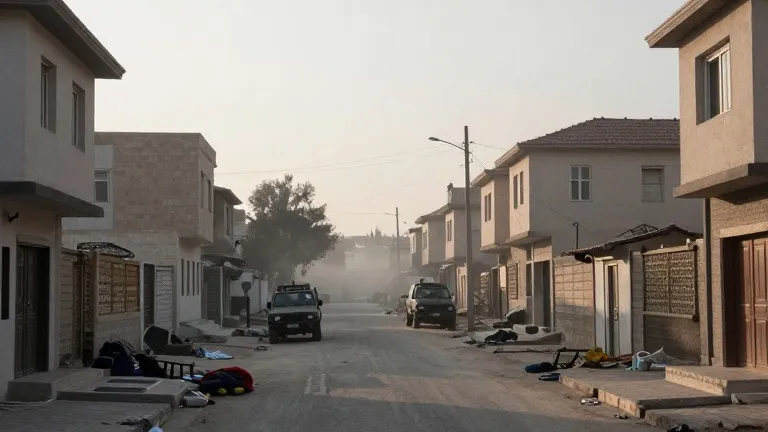
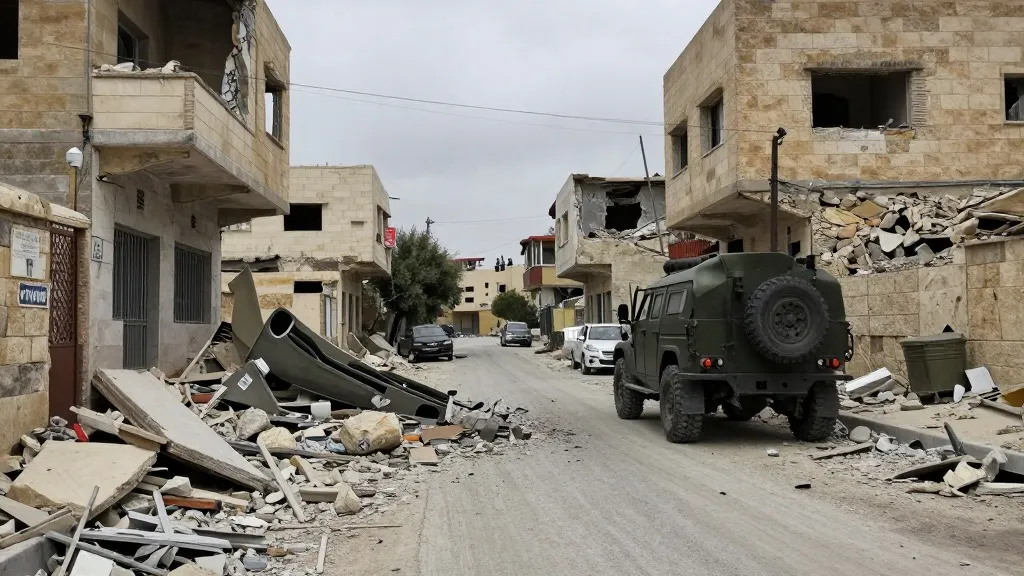
Hezbollah has suffered major military and leadership losses, including the killing of Hassan Nasrallah in September 2024. A new war broke out in March 2026 and caused heavy destruction in villages in southern Lebanon. Whether discontent turns into political change may depend on whether the Lebanese state can offer security, reconstruction and economic opportunity.
Whether these sentiments translate into political change depends on the state's ability to provide security, reconstruction, and economic opportunity to the population.