Federal Lighting Rule: NHTSA Proposes Cyan Glow for Driverless Cars
The agency seeks to standardize blue-green markers for autonomous vehicles while eliminating obsolete controls like manual hazard switches and beam shifters.
By Jason Kovalenko ·
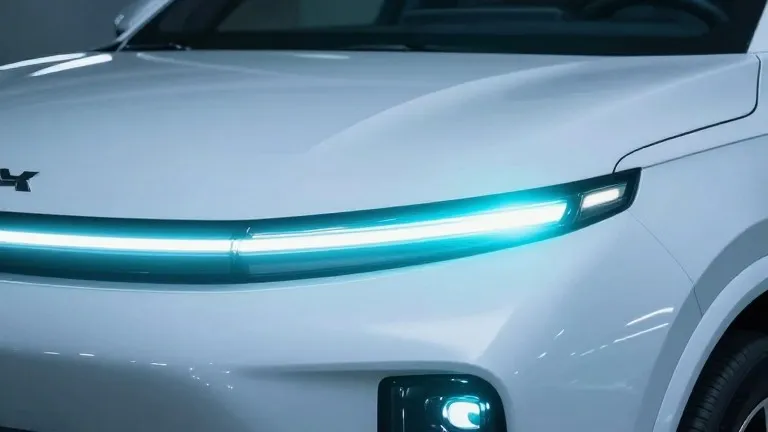
The National Highway Traffic Safety Administration has proposed a blue-green light to identify autonomous vehicles on public roads. The agency released proposed amendments to Federal Motor Vehicle Safety Standard No. 108, which governs vehicle lighting. The rule targets designs that lack a human driver and aims to create a unified visual signal for robotaxis.
NHTSA states the cyan marker lamps would "clearly and consistently signal to law enforcement and other road users when an automated driving system is operating the vehicle." The agency selected this color because red, amber, white, and flashing blue or red lights are already reserved for braking, turn signals, headlights, and emergency vehicles. Cyan fills a visual gap that does not conflict with existing traffic patterns.
The proposed cyan lights would be optional for manufacturers. If a company chooses to install them, NHTSA would set federal requirements for color, brightness, and placement. This standardization prevents a patchwork of different signals from emerging as autonomous fleets expand. The agency notes that Mercedes-Benz previously won state-level approval for turquoise lights on Level 3 Drive Pilot vehicles, though it later shifted to a Level 2++ system.
The proposal targets companies such as Waymo, Nuro, and Zoox, along with automakers including GM and Mercedes. NHTSA wants a national standard that all these entities can adopt in the same manner. The rule also allows manufacturers to build around modern LED systems by updating the 12.8-volt testing standard. It considers dropping rules about the relative position of high-beam and low-beam lights.
The agency plans to remove lighting requirements that apply only to human-driven vehicles. Current rules call for physical hazard switches, manual beam shifters, and turn levers inside the cabin. NHTSA would eliminate these mandates for autonomous designs. This change aligns with a Department of Transportation push to speed up the deployment of driverless cars without traditional controls like steering wheels and pedals.
Existing rules remain in force while the proposal is reviewed. Last month, NHTSA opened an audit query into the Tesla Cybercab to examine the technical data used for its certification. The audit focuses on the absence of sideview mirrors, pedals, and a steering wheel, which are required under current federal standards.