Serbia's Student List Faces Deadline Crunch on Russian Oil and Chinese Infrastructure
With NIS sanctions waivers expiring in December and Expo 2027 approaching in May, the new government must navigate complex economic ties while EU funds remain frozen.
By Thiago Kovalenko ·
Serbia’s new parliamentary majority, led by the Student List, is preparing to assume power with a series of immediate economic deadlines looming on the horizon. The party secured a landslide victory in the election last month, yet it has not yet named a candidate for prime minister. This delay leaves the country without a clear executive team as critical contracts with Russia and China approach their expiration dates.
The most urgent issue involves NIS Group, the operator of Serbia’s only oil refinery. Washington imposed sanctions on NIS because Russian energy giant Gazprom holds a majority stake in the company. These sanctions forced the refinery to suspend production last year. A series of temporary waivers allowed operations to continue while negotiators worked on a deal for Gazprom to sell its share to Hungarian company MOL. That current waiver expires on December 11, 2026.
Vuk Vuksanovic, a foreign policy lecturer at King’s College London, warned that if the waiver is not extended, the result would be a complete economic shock for the new administration. He described the uncertainty as a dark cloud hanging over the government's start. Nikola Xaviereff, a research fellow at the German Council on Foreign Relations, noted that the recent US midterm elections would likely increase pressure from Washington to finalize the deal quickly. Hungarian Foreign Minister Anita Orban stated on November 5 that a deal could be completed before the December deadline.
Serbia also depends heavily on Russian gas, which covers approximately 90 percent of the country's needs. The current supply agreement expires at the end of this year. Former President Aleksandar Vucic claimed on social media that the latest price was 318 euros per 1,000 cubic liters, a figure significantly lower than the market rate of around 900 euros. Student List leaders acknowledge this dependency will persist for the time being.
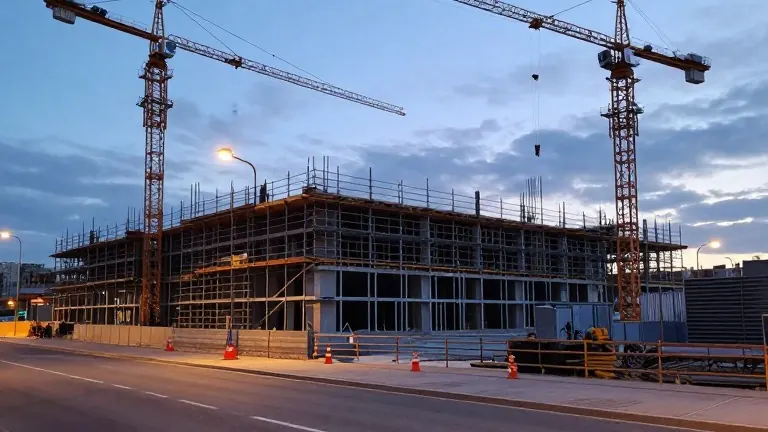
China presents a different set of challenges. Chinese firms built the Novi Sad railway station, where a roof collapse killed several people and sparked the protests that led to the Student List’s victory. Ilija Srdanovic, the lead candidate for the Student List, said the party has no insight into how those contracts were signed or whose interests they served. Chinese companies are involved in major infrastructure projects, including the Belgrade subway and the Expo 2027 complex, which is scheduled to open in May 2027.
Analysts believe the new government will keep Chinese firms on these projects but will scrutinize them more closely. Bartosz Kowalski, an associate professor of Asian studies at Lodz University, said the shift would test the standalone economic value of Chinese investments without direct political protection. China has invested nearly $8 billion in Serbia since 2010, making it the country's second-largest investor after the EU.
Serbia is also trying to unlock funding from the EU’s Growth Plan for the Western Balkans. A European Commission report released on November 4 showed that 167.6 million euros had been paid to Serbia so far. Further payments were frozen earlier in the year due to judicial reforms that Brussels viewed as a step back from democratic standards. Xaviereff suggested that securing these funds would be easier than advancing full accession talks, which remain stalled partly because Serbia does not recognize Kosovo's independence.