Aramco building damaged by intercepted missiles
Saudi air defenses shot down four missiles targeting Riyadh, causing shrapnel to strike the state oil giant's headquarters in the capital.
By Jason Kovalenko ·
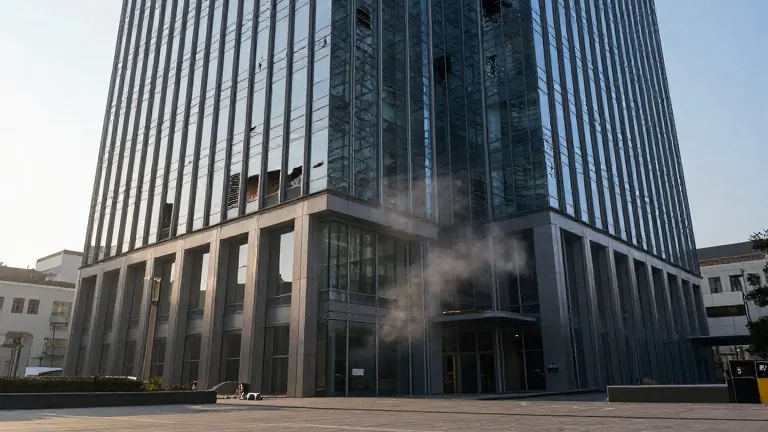
Saudi Arabia intercepted four incoming missiles on Sunday that targeted the capital and other regions, sending shrapnel into a building owned by state oil giant Aramco in Riyadh. The Saudi-led coalition accused the Houthis of launching two ballistic missiles and two cruise missiles early that morning. Air defenses engaged the weapons, but falling debris struck the Aramco facility in the King Abdullah Financial District.
Witnesses in Riyadh reported hearing a loud explosion and observing damage across multiple floors of the building. Some levels appeared heavily damaged. The Saudi Energy Ministry described the incident as resulting in falling shrapnel that caused minor damage to the structure. The ministry confirmed there were no casualties. The Saudi Center for International Communication and Aramco did not immediately respond to requests for comment.
The coalition also intercepted a separate ballistic missile overnight targeting Saudi Arabia's southern region. This area borders Yemen and has faced repeated Houthi attacks. The missile activity followed Saudi airstrikes near Sanaa, Yemen's capital, on Saturday. Houthi officials stated that those strikes killed at least 27 people.
Shipping risks in the region intensified during the same period. The UAE National Guard rescued 22 crew members after a cargo ship caught fire in the Sea of Oman. All 22 crew members were of Arab nationalities and remained in stable condition after receiving first aid. The guard did not identify the vessel or the cause of the fire. The United Kingdom Maritime Trade Operations reported a tanker fire on Saturday about 8 nautical miles northwest of Khasab, Oman. It was unclear if this was the same ship.
U.S. forces disabled a St. Kitts-flagged cargo ship in the Gulf of Oman on Saturday. The military said the vessel attempted to breach the U.S. naval blockade of Iran. The blockade operates in and around the Strait of Hormuz, a key waterway for global oil shipments. The Iranian military announced late Saturday that two tankers struck mines in the Hormuz area and caught fire.
In political developments, Israeli President Isaac Herzog designated Gadi Eisenkot to form the next government on Saturday. Herzog made the decision after consultations with parties elected to the parliament on October 27. The move follows Prime Minister Benjamin Netanyahu's loss of his parliamentary majority in an election that produced no clear winner. Eisenkot will begin negotiations with potential coalition partners following an official ceremony on Sunday.
Residents in Israel, the Palestinian territories, and the wider region reacted to the political shift with mixed views. In Jerusalem, resident Anny Soronow said the majority of the country is against the current regime and needs a new start. Some residents hoped for a government that would reverse Netanyahu's judicial overhaul and include an Arab party. In Lebanon, resident Rima al-Ghazal did not expect an Eisenkot-led government to end strikes in the south. In Tehran, resident Ali Soroush said the enmity between Israel and Iran will continue.