Musk calls lunar fuel estimate way too high
SpaceX CEO argues six to eight tankers will suffice, contradicting a NASA safety panel's estimate of 22 flights.
By Jason Kovalenko ·
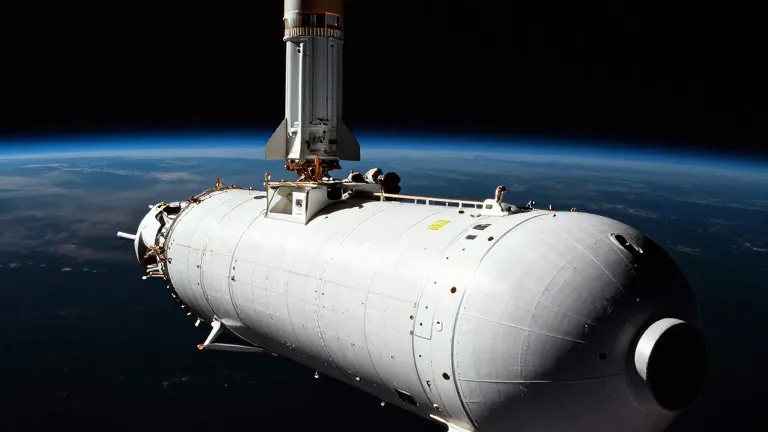
NASA plans to return humans to the Moon by 2028, a goal that depends on refueling spacecraft in Earth orbit. A new dispute over how many rocket launches are needed for that task has emerged between SpaceX and a federal safety advisory group.
Elon Musk publicly rejected an estimate provided by the Aerospace Safety Advisory Panel on Thursday. During the panel's quarterly public meeting, member Charlie Precourt, a former NASA astronaut, identified the fueling of the lunar lander as a key risk for the Artemis IV mission. Precourt stated that the latest estimate requires approximately 22 flights to fill the necessary propellant tanks.
Musk responded to Precourt's remarks on the social media platform X, where the comments were shared by journalist Eric Berger. The SpaceX CEO wrote that the 22-flight figure was "way too high." He argued that the actual number of required tanker launches would be closer to six or eight. This marks the second time Musk has lowered his projected count, having previously dismissed a 16-launch estimate in 2021 as unlikely.
The technical challenge involves using the Starship vehicle for both Earth orbit and lunar transit. The rocket consumes nearly all its propellant to reach orbit, making it unable to continue to the Moon without additional fuel. SpaceX proposes an orbital fuel depot, where tanker versions of Starship dock and transfer their remaining propellant. Once the depot is full, the crewed lunar lander launches, refuels, and departs for the Moon.
The difference in estimates stems from assumptions about vehicle performance and fuel loss. Propellant stored in orbit at extremely low temperatures slowly evaporates, and more fuel is lost during each transfer operation. NASA appears to base its 22-flight calculation on the current lifting capacity of Starship. Musk's lower range assumes a more capable version of the vehicle, known as V3, which is not yet fully operational.
The timeline for these launches is tight. Berger calculated that even if SpaceX achieves a rate of two Starship launches per week by the end of 2027, filling the depot to the panel's 22-flight level would require about three months. Precourt noted that Artemis IV involves "a large number of firsts." He also credited NASA Administrator Jared Isaacman for working to clear path for both SpaceX and Blue Origin, whose alternative lander does not require orbital refueling for its initial mission.