Opposition Bloc Splits Over 58-Seat Minority Government Bid
Gadi Eisenkot proposes governing with under 61 seats, while Naftali Bennett and Avigdor Liberman insist on a full Zionist majority.
By Jason Kovalenko ·
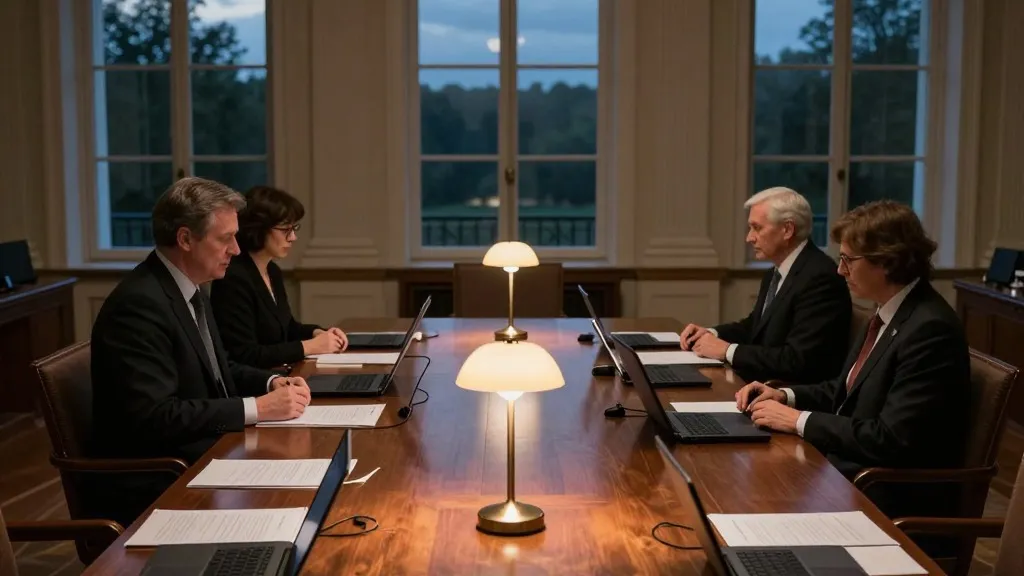
Gadi Eisenkot has proposed a path to power for Israel’s opposition that bypasses the traditional requirement of 61 Knesset seats. The former defense minister seeks to lead the anti-Netanyahu camp and serve as the primary candidate to form the next government. His plan envisions a minority cabinet sworn in with 58 or 59 seats, relying on a confidence vote where abstentions allow for a majority, rather than permanent backing from 61 MKs.
This strategy stands in direct conflict with the positions of Naftali Bennett and Avigdor Liberman. Both leaders categorically reject a minority arrangement, including transitional versions. Bennett and Yair Lapid, who head the Beyachad list, demand a government composed entirely of Zionist parties and refuse to rely on the votes or abstentions of Arab parties. Liberman stated that another election would be preferable to a government that does not meet his conditions for a Zionist majority.
The legal distinction between forming a government and removing one underpins the debate. Swearing in a new government requires a majority in a confidence vote, meaning abstentions can facilitate the process. However, a constructive vote of no confidence against an incumbent government requires 61 MKs to back an alternative. Eisenkot’s minority scenario would apply to forming a new government but would not allow the bloc to remove a sitting Prime Minister Benjamin Netanyahu by simple majority.
Polls currently show the anti-Netanyahu camp ahead of the outgoing coalition, though the Zionist parties seeking change fall short of the 61-seat threshold in their current agreements. The final seat distribution could hinge on the electoral threshold and a small number of votes. Eisenkot has not ruled out outside support from Ra’am, but no agreed formula exists for implementing such a plan. Liberman suggested bringing Likud MKs into a government without Netanyahu, claiming some would be willing, though he has named no specific members.
As the bloc debates the structure of future governance, parties are reportedly nearing agreement on replacing Knesset Speaker Amir Ohana before any coalition deal is struck. This move aims to give Netanyahu’s opponents control of the parliamentary agenda, even if he remains head of a caretaker government. The speaker is elected early in a new Knesset term via public vote, and the bloc could assemble a majority behind an agreed candidate using support from Arab party MKs.
Names raised for the speaker position include Chili Tropper, Matan Kahana, and Elazar Stern from Eisenkot’s list, as well as Meirav Ben-Ari and Eitan Ginzburg from the Bennett-Lapid list. Efrat Rayten of the Democrats and attorney Oded Forer of Yisrael Beytenu are also in the mix. Liberman estimated this week that as many as one-third of outgoing coalition MKs might vote against Ohana, provided they do so openly.
The bloc also intends to advance a state commission of inquiry into October 7, changes to conscription law, and limits on the prime minister’s tenure. Liberman seeks a bar on people facing criminal charges serving as prime minister. No binding agreement exists on the details or order of these legislative priorities, and party teams have only just begun coordinating on the specifics.
More Politics · World news · Report a business · Got a Story?