Trump heads to Mississippi as Senate race tightens
Millions in late-stage spending and high Black voter turnout are turning a historically red state into a battleground for the midterms.
By Thiago Kovalenko ·
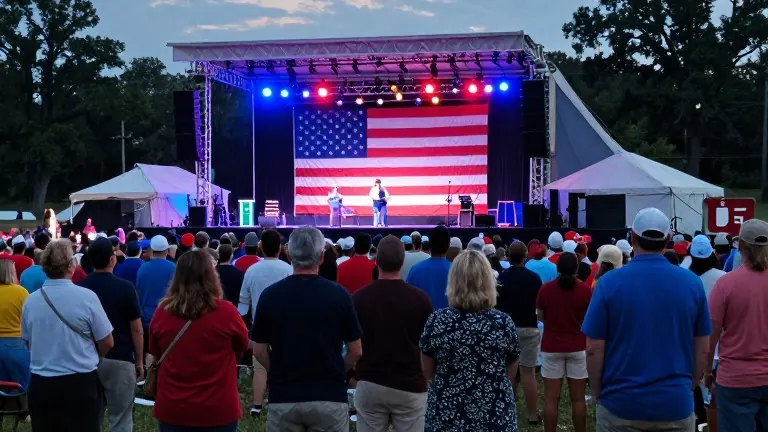
President Donald Trump arrives in Mississippi today to launch the final week of campaign travel before the midterms. The visit comes as the state’s U.S. Senate race transforms from a safe Republican seat into a competitive contest driven by heavy financial investment and shifting voter dynamics.
Mississippi holds the highest share of Black voters in the country and ranks among the nation’s poorest states. These factors make the impact of higher prices more acute for residents. Despite these demographics, President Trump carried the state by 23 points in the 2024 presidential election. The state remains deeply racially polarized, with rural and agricultural communities forming the core of the Republican base.
Democratic nominee Scott Colom, a district attorney, is challenging incumbent Republican Cindy Hyde-Smith. The two have a history, as Hyde-Smith blocked Colom’s nomination to a federal judgeship during the Biden administration. In recent weeks, both parties have poured millions of dollars into the state. Polling indicates that elevated Black turnout and a decline in Republican base voter participation have narrowed the gap. Voters across the state express dissatisfaction with current leadership regardless of party affiliation.
At a rally in Columbus Thursday night, Celestine Rice, a local dancer, described the current political climate. She noted that the moral compass of the country feels gone and that big money does not trickle down as promised. Former Vice President Kamala Harris headlined the event, joined by Georgia Senator Raphael Warnock and former transportation secretary Pete Buttigieg. Their presence signals a strategic push by national Democrats who view Mississippi as essential for the party’s future.
Republican strategists argue that the heavy Democratic spending proves Colom is too extreme for the state. Hyde-Smith’s campaign has aired advertisements labeling him the most radical Senate candidate in a lifetime and a figure beholden to the far left. Democrats counter that there is no distance between the unpopular president and downballot Republicans. Colom argued that if Hyde-Smith were focused on voters, the race would be tougher, implying her current approach is not.
The contest serves as a proxy for debates over Black voting power in the South. Several Republican-led states have redrawn congressional maps to reduce opportunities for Black voters following a Supreme Court ruling earlier this year. Colom warned that these efforts could extend to school boards and judicial elections. He stated that removing power from voters and giving it to leaders contradicts the basic mechanics of democracy.
Historical obstacles remain formidable. The last Democrat to win a Senate seat in Mississippi did so in the early 1980s. The last successful Black statewide candidate emerged during Reconstruction. In the 2018 special election, Hyde-Smith won by roughly seven points during a national blue wave. Ashley Kennedy Shelton, who runs a nonpartisan civic engagement group in Louisiana, reports that voters across all stripes feel tired of the current system. A surge in Black voter turnout in primaries and early voting has contributed to the current competitive environment, prompting Trump to hold a rally in the northeast corner of the state.
The race continues with both sides intensifying outreach in the final days before the election. Trump’s presence in the state underscores the national attention on this specific Senate contest.