Teton County Sheriff sends 1998 hiker's bone to DNA Doe Project
The tibia, which failed to match in the FBI's database six years ago, is now undergoing forensic genealogy to locate distant relatives.
By Thiago Kovalenko ·
The tibia of an unidentified man found in 1998 arrived at the DNA Doe Project lab in Georgia on Thursday. Sgt. Robert Osmond of the Teton County Sheriff's Office said the bone is in good condition for testing. The lab will use forensic investigative genealogy to build a genetic family tree and identify distant relatives. This step aims to track down the man's immediate family.
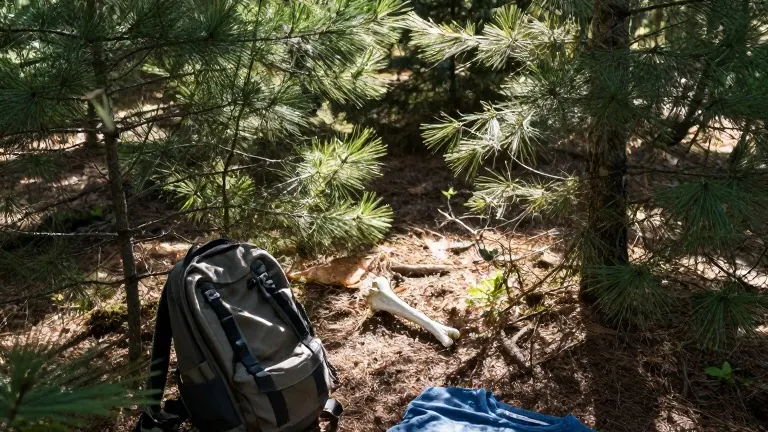
Investigators first found the remains in the summer of 1998 near Cache Creek on the Bridger-Teton National Forest. A hiker discovered a skull off the trail, and search dogs located the rest of the body 250 feet downhill two weeks later. The man was wearing a Velcro-strapped tennis shoe. His bones were scattered among a backpack, a faded blue T-shirt, and a 1990 penny.
The most unusual evidence was an IV setup. A tube, bag, and needle hung from a tree limb five feet above where the arm would have been. Eight glass vials containing a cloudy liquid lay on the ground. State crime lab testing found the liquid too degraded to analyze. Deputy director Scott McWilliams noted that nearly 30 years of evaporation and chemical degradation likely wiped out any slight technological advantage in testing the samples.
In 2020, the sheriff's office reopened the case after reorganizing stored evidence. Technicians sent the tibia to the University of North Texas Center for Human Identification. They extracted a viable genetic profile. When entered into CODIS, the FBI's criminal DNA database, the profile yielded no matches. That lack of a match led to the current decision to use genetic genealogy.
Osmond described the case as odd and in need of exposure. He hopes the public will recognize the man or his defunct TwoGeneration brand T-shirt. The department also appealed for help with the man's shoes, which are now rare vintage items. Estimates place the man's death between 1990 and 1995. He was likely a white man of European ancestry, aged 20 to 65, and between 5-foot-7 and 5-foot-10.
A 2000 facial reconstruction generated no leads. Early suspects included Robert Schnelker, who disappeared in 1979, and Amy Wroe Bechtel, who vanished in 1997. Both were ruled out or remain missing without a confirmed link to the bones. Volunteer genealogists Ashley Kroner and Megan McWilliams are also searching databases in surrounding states. Kroner said the circumstances do not align with data from before the 1990s.