Ryan Maue calculates 20 trillion gallons of rain hit Southwest in two weeks
The deluge, driven by El Niño, has killed at least one person in Arizona and forced hundreds of evacuations across four states.
By Jason Kovalenko ·
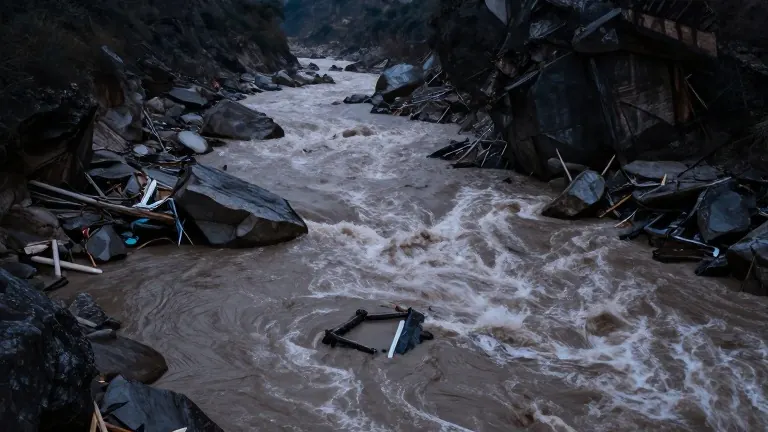
Former National Oceanic and Atmospheric Administration chief scientist Ryan Maue calculated that 20 trillion gallons of water have fallen on the Four Corners states and Nevada in the past two weeks. This massive influx is driving severe flooding across the arid Southwest, where officials reported at least one death and suspected a second on Monday. The National Weather Service warned that up to 4 inches of rain could fall across the region where New Mexico, Arizona, Colorado, and Utah meet. Meteorologists attributed the disruptive weather patterns to El Niño, a phenomenon fueled by warming Pacific waters.
In Pagosa Springs, Colorado, the San Juan River reached 16.81 feet late Sunday before receding on Monday. This level fell just below the 17.8-foot crest recorded during the town's devastating 1911 flood. Officials had previously warned of potentially catastrophic conditions for the town of more than 2,000 residents. The Colorado Secretary of State's office arranged alternative voting plans for residents who were evacuated or stranded by the rising waters.
Durango police Chief Brice Current stated that authorities were checking on residents who remained in their homes along the Animas River. He noted that many people remained stranded and emergency services were in high demand. The Animas River closed to kayaks and other recreational watercraft, and officials warned that sewage and chemicals flushed into the water could cause illness. Riverside trails and foot bridges also closed to prevent additional emergencies.
Evacuation orders expanded along the San Juan River in New Mexico and across the Navajo Nation. The Utah Navajo Health System posted updates regarding highway closures and detours. The village of Chama in New Mexico was evacuated and cut off by road closures, while the rising Jemez River rendered campgrounds and fishing sites inaccessible further south.
Arizona recorded historic rainfall totals, with Workman Creek, a wilderness area northeast of Phoenix, measuring 7.3 inches of rain over two days. In Flagstaff, the city recorded 5.15 inches of rain, marking the wettest November 1 in its history. NWS Weather Prediction Center meteorologist Jennifer Tate described the event as a broad system that delivered heavy rain to many locations rather than a localized storm.
Flagstaff police recovered the body of 73-year-old Williams Singavarapu of New York Monday morning, approximately 15 blocks from where he fell into a drainage tunnel near Northern Arizona University on Sunday. Police also found a second unidentified man dead in a storm water drainage area and determined the death appeared weather-related, pending an official cause and manner determination.
In Sedona, officials ordered residents near Oak Creek to leave their homes Sunday as floodwaters trapped multiple people. Heavy rain washed out a section of the main highway between Flagstaff and Sedona, damaging guard rails and scattering boulders and trees across the road. Arizona Department of Transportation crews worked to clear the debris and repair the infrastructure. In Tucson, meteorologist Aaron Hardin reported that the city received two or three months of rain in a span of a couple of days.
Residents in the Pinetop-Lakeside area of central Arizona reported sewage backing up into homes, a condition the region's sanitary district announced was caused by flooding that lifted manhole covers. In Pagosa Springs, Katie German, owner and chef of Bruin Coffee, expressed concern for her business and employees while the town remained evacuated. She worried specifically about the single bridge into town washing out, which would block trucks carrying food and fuel.
The La Plata County clerk in Colorado implemented special hours on Tuesday to assist voters. Mail ballots from evacuated residents can be returned to any drop box or vote center in the state by 7 p.m. on Election Day. In-person voters outside their home county may vote only for statewide races, while those with mail ballots can obtain replacements at any state vote center.