Record tides flood Mission Bay, submerging habitats and setting new water marks
A convergence of El Niño, king tides, and thermal expansion pushed water levels to historic highs, forcing emergency repairs to wildlife platforms.
By Jason Kovalenko ·
Water levels in Mission Bay hit an all-time high on Oct. 27, surpassing records kept for more than a century.
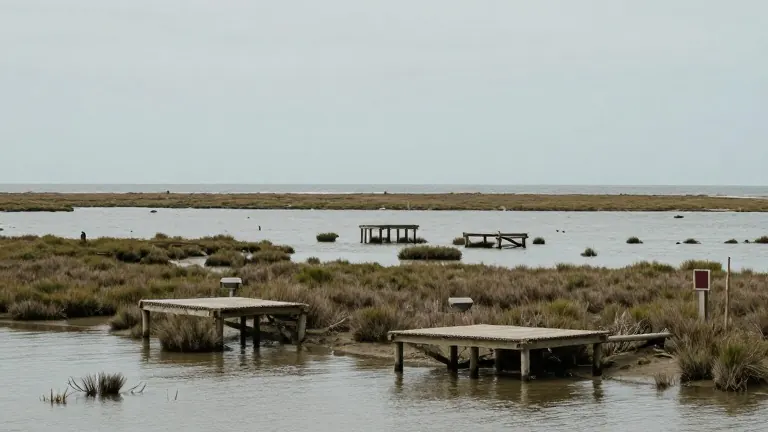
The surge resulted from four converging factors: autumn king tides, Kelvin waves driven by El Niño, record-high ocean temperatures, and long-term sea-level rise. At Scripps Pier, the local gauge recorded water 2.8 feet above normal at 9:54 a.m. on that date. This event eliminated most sandy beaches and flooded bike paths, altering recreational access for swimmers and paddleboarders. For local wildlife, the high water submerged nesting structures in Kendall-Frost Marsh and shifted hunting grounds for various bird species.
NOAA data explains that Kelvin waves are slow-moving, large-scale oceanic pulses that push warm water eastward toward the Pacific coast. These waves temporarily raise sea levels by 6 to 12 inches or more. Simultaneously, thermal expansion occurs as warmer water occupies more volume than colder water. This physical change causes water levels to rise higher and reach further inland. The combination of these drivers has led to record flooding of roads, homes, and businesses.
Andrew Meyer, conservation director for the San Diego Bird Alliance, stated that the current conditions visualize the future of sea-level rise. He noted that these tides are becoming more frequent and higher in magnitude. The alliance responded to the Oct. 27 record by conducting emergency work on Thursday to extend nesting platforms. This action aimed to prepare for additional high tides predicted for Nov. 22 through 27 and Dec. 22 through 26. NOAA forecasts that El Niño will continue generating Kelvin waves through late fall and winter. Ocean temperatures, currently 10 degrees Fahrenheit above normal at 73 to 74 degrees, are expected to remain elevated.
The rising water has disproportionately affected the endangered light-footed Ridgway’s rail. Meyer reported that the birds' feet are getting wet because the water level exceeds the platform's maximum height. This condition is unprecedented for the marsh. On Thursday, Meyer and his team entered the 50-acre Kendall-Frost Marsh to raise the elevation of the nesting platforms. The alliance maintains 21 platforms and eight cameras in the area, down from 22 platforms just last month after one vanished in the surge. Meyer described the higher water levels as effectively eliminating the marsh, turning the area into open water.
The shift in habitat has changed bird behavior in the region. Pelicans and double-crested cormorants, which typically hunt in the ocean or deeper bay parts, were observed fishing in Kendall-Frost Marsh last week. Meyer noted that while some species benefit from increased open water, species like the Ridgway’s rail are limited to marsh habitats. He emphasized that the marsh serves as a critical buffer, pulling carbon from the air and acting as a sponge for coastal surges. City Council members are scheduled to vote in mid-November on changes to the marshland expansion plan requested by the state Coastal Commission.
Meyer described the Ridgway’s rail as an indicator of wetland health. He observed that these birds have started living in areas previously occupied by humans. The current conditions demonstrate how climate factors are reshaping the bay's physical and ecological structure. The Bird Alliance continues to monitor the site as they work to secure dry platforms for the rails.
The next major tide cycle is expected to bring similar or higher water levels in late November. The combination of warm water and tidal forces remains active. Local infrastructure and wildlife habitats will continue to face pressure from these record-setting conditions.
More Business · Rip-Off Report · Report a business · Got a Story?