High-speed crash in Toledo leaves 69 dead after control center authorizes full speed
Audio recordings show operators cleared a train to travel at 200 km/h while another train was stalled ahead due to a system failure.
By Thiago Kovalenko ·
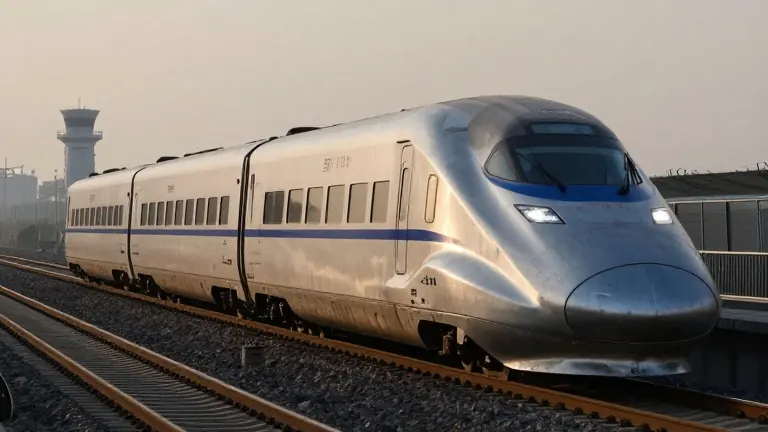
Passengers and families in Spain face the aftermath of a high-speed rail collision that killed at least 69 people on Wednesday morning. The crash occurred just before 09:00 local time in the province of Toledo when a state-run Renfe AVE train struck a private Iryo train from behind. Both services operated the Madrid to Sevilla route.
Audio files released by Spanish media provide a timeline of the events leading to the impact. The trains were traveling on a track roughly 140 kilometers south of Madrid when a widespread computer fault halted their progress. The failure affected the LZB system, a continuous signaling and control technology that monitors speed and position in real time. It can automatically brake a train if the driver exceeds safety limits.
Center control operators at Atocha in Madrid attempted to resolve the outage near Urda, Toledo. At 08:41, an operator instructed the driver of the Iryo train, number 6076, to disconnect and reconnect the LZB system. The operator also told the driver to resume travel under the BSL backup system with normal movement. The driver acknowledged the order but later reported she could not restart the train due to a transmission fault. By 08:48, the driver told the control center she still had not advanced. The operator simply told her to move as soon as possible.
The AVE train, number 2080, received similar instructions to clear the fault and resume normal movement. The AVE was located about 30 kilometers behind the stalled Iryo train. At the authorized speed of up to 200 km/h for that zone, the distance between the two trains covered a short interval. Five minutes after the final communication, the AVE collided with the rear of the Iryo train.
Transport Minister Óscar Puente described the incident as inexplicable. He stated that the decision to resume circulation without the safety system fully restored was made by the control center. According to standard protocols, a failure in the LZB system requires trains to move at a safety speed capped at 40 km/h. This lower speed allows drivers to see obstacles and stop in time. The operators instead authorized normal speed, a deviation from standard procedure that has drawn immediate scrutiny.
Prime Minister Pedro Sánchez ordered a thorough investigation into the crash. Officials noted that the investigations have only just begun. The audio evidence suggests the AVE driver followed direct instructions from the control center while the train ahead remained stalled. The discrepancy between the authorized speed and the actual status of the leading train is the central focus of the inquiry.
More Business · Rip-Off Report · Report a business · Got a Story?