Democrats seize both chambers as Trump's redistricting plan collapses
Voters rejected the president's party in a wave that overturned GOP map advantages, delivering Democrats control of the House and Senate.
By Thiago Kovalenko ·
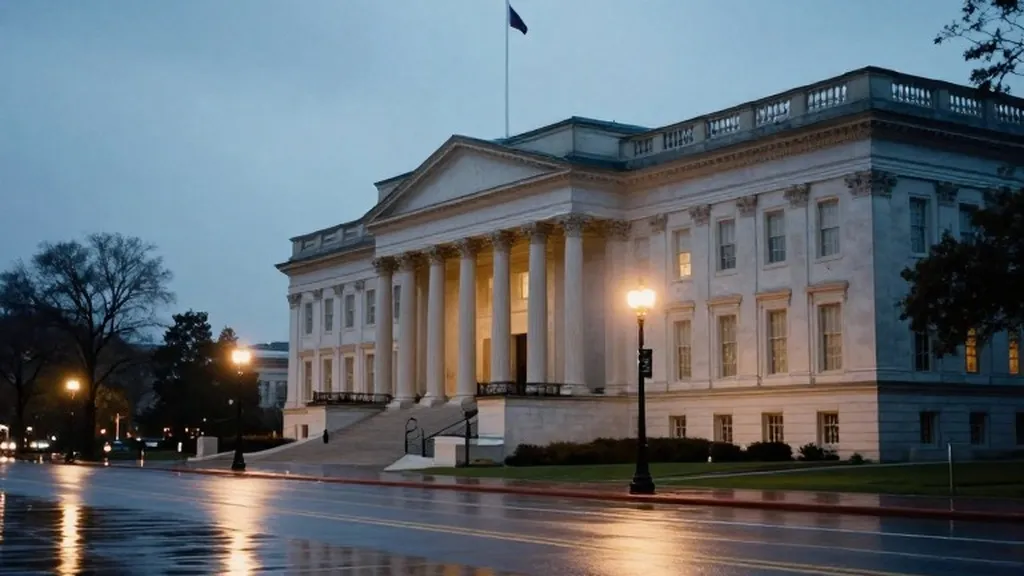
Democrats have taken control of both chambers of Congress, a decisive victory that reverses two years of Republican dominance and sets the stage for a divided government. The Associated Press reports that the results are decisive, with Democrats holding at least 54 seats in the Senate and a majority in the House, well past the 218 needed. This sweep was fueled by voter dissatisfaction with President Donald Trump, the economy, and the war with Iran. The political map has been fundamentally reshaped, with new opportunities for governing and challenges for the administration.
The Republican Party's strategy to hold power through mid-decade redistricting has failed. At the urging of President Trump, Republicans in eight states redrew congressional district boundaries hoping to secure a slim majority in the House. However, they lost most of the Democratic-held seats they targeted and others they banked on retaining. Former Attorney General Eric Holder, chair of the National Democratic Redistricting Committee, stated that the plan was systematically dismantled. He noted that voters chose to elect a new Democratic majority when given the opportunity.
In Texas, the redistricting effort fell flat in the Rio Grande Valley. Republicans reconfigured three heavily Latino districts to try to unseat Democratic incumbents Henry Cuellar and Vicente Gonzalez. Both won reelection Tuesday. Meanwhile, Democrats unseated Republican Representative Monica De La Cruz, whose district was sandwiched between theirs. The AP Voter Poll indicates a substantial shift in Hispanic voters moving away from Republicans compared to Trump's victory two years ago. About one-third of Hispanics nationally backed the Republican in their local House race, while roughly 4 in 10 voted for Trump previously.
Florida and Alabama also saw Democratic retention despite Republican map changes. In Florida, Democrats retained seats in districts that Republicans had reshaped for an advantage. Representative Jared Moskowitz won reelection in Florida's 25th District, stating that voters were most concerned about the economy and their ability to afford a good quality of life. He added that redistricting angered voters, too. Representative Kathy Castor also won reelection in a district where about two-thirds of voting-age residents were new. In Alabama, Representative Shomari Figures won reelection, defying Republican plans after a Supreme Court ruling allowed the state to revert to a friendlier map.
The Senate saw significant gains for Democrats in states that had not elected a Democratic senator in decades. Wins in South Carolina and Kansas, which had not elected a Democratic senator since 1932, were part of a broader wave. In Texas, Democrats broke a three-decade drought of statewide losses. Decision Desk HQ projected that Democrats would win control of the U.S. Senate based on results from November 3. Ballotpedia reports that seven U.S. Senate seats changed party hands in Iowa, Kansas, Maine, North Carolina, Ohio, South Carolina, and Texas. These victories end an era of rapid judicial appointments for the Republican Party.
Vice President JD Vance publicly broke from President Trump's defense of the Iran war after the Republican losses. Vance blamed the unpopular conflict with Iran for the GOP's drubbing in a lengthy social media post. He questioned whether losing the Senate for the next six years was worth the war. Trump, however, continued to defend the conflict, stating that the Iran thing had to be done. The AP Voter Poll found that about 6 in 10 voters said the U.S. made the wrong decision in taking military action against Iran. Most of those voters dissatisfied with the war backed Democratic candidates in their House races.
The cost of living emerged as the central issue for voters. The AP Voter Poll found that three-quarters of voters say the economy is not so good or poor. About 8 in 10 say inflation has caused a severe or moderate financial hardship for their households. Democrats are promising a 100-day agenda starting with efforts to lower the costs of gas, groceries, and other goods. They also plan to reverse cuts to the Affordable Care Act and Medicaid healthcare programs. House Democratic Leader Hakeem Jeffries, who will become the first Black speaker of the House, said, We hear you. He added that the party will work hard to deliver on the dramatic change that voters deserve.
Oversight of the administration will be a priority for the new Democratic Congress. House Democrats are ready to launch a robust oversight agenda to hold the administration accountable. Representative Robert Garcia, the top Democrat on the House Oversight Committee, issued a one-sentence warning: Lawyer up. Senator Ron Wyden, the top Democrat on the Senate Finance Committee, issued a one-word missive: Subpoenas. Impeachment of the president or his Cabinet members is an option. The divided government will allow Congress to reassert itself as a coequal branch ready to challenge Trump and reverse course after two years of unified GOP control.
President Trump gave extended comments Wednesday, focusing on the construction of a sprawling White House ballroom rather than the election results. He invited reporters into the construction site and talked about the building project for nearly 20 minutes without mentioning the sweeping Republican defeats. Trump insisted that if he were on the ballot, he would have won. He said a series of rallies featured a lot of love from supporters that was not transferred to the candidates. The AP analysis of his speeches showed he used the phrase pretend I'm on the ballot in 30 of 39 rallies since September 1. This approach contrasts with previous presidents who publicly shouldered responsibility for midterm losses.