Binnari Village Hit by Motorcycle-Backed Bandits in Eastern Nigeria
Discrepancies in death tolls emerge after a large group of armed men raided a community in Taraba State, sparking debate over the true cost of rural insecurity.
By Thiago Kovalenko ·
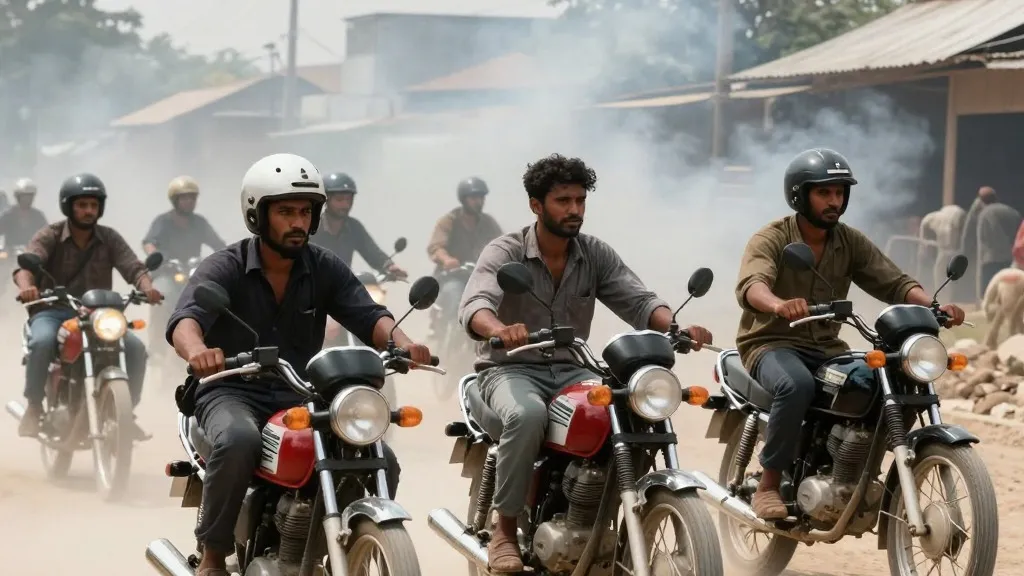
A large group of armed men on motorcycles attacked Binnari village in Taraba State, eastern Nigeria, killing at least ten people in an incident that has highlighted the persistent threat of banditry in the region. Police confirmed the initial toll on Saturday, noting that the attackers also looted local shops. However, residents and human rights organizations report significantly higher numbers, suggesting the violence was more devastating than official figures initially indicated. The raid occurred just after Friday prayers, catching many villagers off guard during a time of communal gathering.
The sequence of events began when approximately 50 motorcycles, each carrying two men, arrived at the village. According to Malam Abubakar Saifullahi, a community leader, the assailants moved through the area rapidly, raiding homes and businesses. They seized cash, food supplies, and other provisions. As residents fled the gunfire, the attackers also took motorcycles that owners had abandoned in their haste to escape. The speed and coordination of the group overwhelmed the local population, leading to significant loss of life and property.
Discrepancies in the reported death toll have created a complex picture of the attack. While police stated that ten bodies were recovered by Friday evening, survivor accounts tell a different story. Sa'idu Nuhu, a resident of Binnari, told AFP that more than 20 bodies were counted after the attackers left, with others still missing. Isiyaku Musa, another local resident, also estimated the toll at no fewer than 20. Amnesty International went further, stating in a Saturday statement that 40 people were killed. The organization noted that police had initially confirmed only ten deaths but that more bodies were discovered later in the day.
This incident is part of a broader pattern of violence in Nigeria, where banditry has become a growing concern in the northwest and central regions. These groups are not driven by a specific ideology but operate as powerful gangs that clash with overstretched security forces in remote areas. In Taraba, a central-eastern state, these bands frequently raid villages, kidnap individuals for ransom, and impose informal taxes on farmers and miners. The lack of consistent state presence in these rural zones allows such groups to operate with significant freedom.
Amnesty International criticized the Nigerian authorities for their response to these recurring attacks. The group stated that officials continue to leave rural communities in certain parts of the north at the mercy of gunmen who commit atrocities with impunity. This critique underscores the frustration felt by residents who feel neglected by the state despite the frequency of such violent events. The organization's statement serves as a reminder of the ongoing struggle for security in areas far from major urban centers.
In a separate development on Saturday, the Nigerian military announced that it had killed 15 terrorists in an air strike in the northeastern state of Borno. This action is part of the country's long-standing fight against armed rebellion, which began with the 2009 uprising by Boko Haram. While this strike targets a different group in a different region, it highlights the multifaceted nature of Nigeria's security challenges. The government continues to address both the insurgency in the northeast and the banditry in the center and northwest, attempting to stabilize a vast and diverse nation.
The situation in Binnari now moves into a phase of recovery and investigation. Local leaders are working to account for the missing and assess the damage to the community. For working families in these rural areas, the attack represents a direct impact on their livelihoods and safety. As the official death toll may rise, the focus will remain on how the state can better protect its citizens in these vulnerable regions. The incident serves as a stark reminder of the ongoing security challenges facing eastern Nigeria.