Arizona's 6th District: A Proxy War Over the White House
Voters in southern Arizona are choosing between Juan Ciscomani and JoAnna Mendoza based largely on their feelings about President Trump, not the candidates' specific platforms.
By Thiago Kovalenko ·
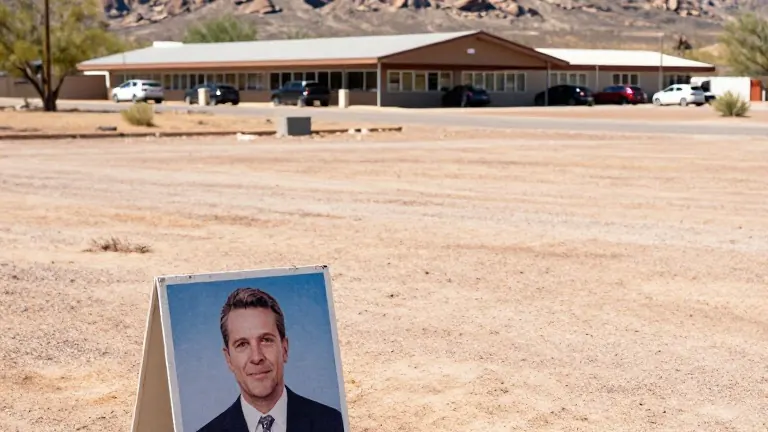
Juan Ciscomani and JoAnna Mendoza have spent tens of millions of dollars attacking each other in Arizona’s 6th Congressional District, yet many voters say they are deciding their ballot based on President Donald Trump rather than the two candidates. The district, which stretches from the U.S.-Mexico border to Phoenix, has flipped between parties with narrow margins in recent cycles. Biden won it in 2020 by less than one percentage point, and Trump reclaimed it in 2024 by a similar slim margin. Ciscomani, a Republican incumbent seeking a third term, and Mendoza, a Democrat and Marine veteran, are fighting for the seat in a race that both parties consider a top priority.
Voters in the region describe the campaign as a referendum on the president’s two-year tenure. Michael Falk, a 66-year-old retiree in Pima County, voted for Mendoza because he believes Trump empowered bigots. He cited recent laws targeting brown and undocumented people as evidence of this shift. On the other side of the aisle, Gregory Corron, a 67-year-old computer programmer, voted for Ciscomani because he views the president’s focus on exposing fraud and boosting the stock market as positive. Corron fears that a Democratic majority in Congress would halt the reforms started by the administration.
The district contains a large Latino population, with both candidates identifying as Mexican American. Mendoza has emphasized her military service, running ads near Fort Huachuca with the slogan “Battle Tested. Ready To Lead.” Ciscomani counters by highlighting his bipartisan record and running signs that read “Veterans For Ciscomani.” Mendoza has labeled the incumbent a “spineless” tool of Trump, while Ciscomani’s ads portray Mendoza as an agent of the left. This dynamic leaves many voters feeling they are choosing between two stand-ins for a larger national conflict.
Economic concerns weigh heavily on undecided and disaffected voters. Susan Summers, a 74-year-old retiree in Vail, accepted higher gas prices as a trade-off for stopping Iran’s nuclear program. She said she expects prices to drop once a resolution is reached. In contrast, Ann Nichols, a 72-year-old independent in Sierra Vista, listed tariffs, the war in Iran, and corruption as reasons to support Mendoza. Nichols called the EPA an “Environmental Pollution Agency” and criticized the current leadership of medical affairs. Her vote is intended to check the president’s power and reverse policies she believes have damaged the economy.
Some voters express fatigue with both parties. Clayton Surratt, a 63-year-old retired actor volunteering at a food bank in Vail, said the government thrives on cruelty. He expressed uncertainty about what Democrats stand for beyond opposing Trump. Adam Thompson, a 39-year-old independent, argued that resources spent on foreign wars do not help local workers put food on the table. He said the conflicts in the Middle East are not helping him pay for his living expenses.
A growing number of voters are opting out of the process entirely. Rick, a 67-year-old retired government worker who declined to give his last name, said he has stopped voting permanently. He voted for Trump in 2024 as a final test of the system but was disappointed by new wars and high taxes. Alex Lagerberg, a 35-year-old tattoo artist and three-time Trump voter, said he is not motivated to choose between the current candidates. He believes treating the country like a business has not produced the expected results. The outcome of the district race will depend on how many of these apathetic voters stay home on Tuesday.