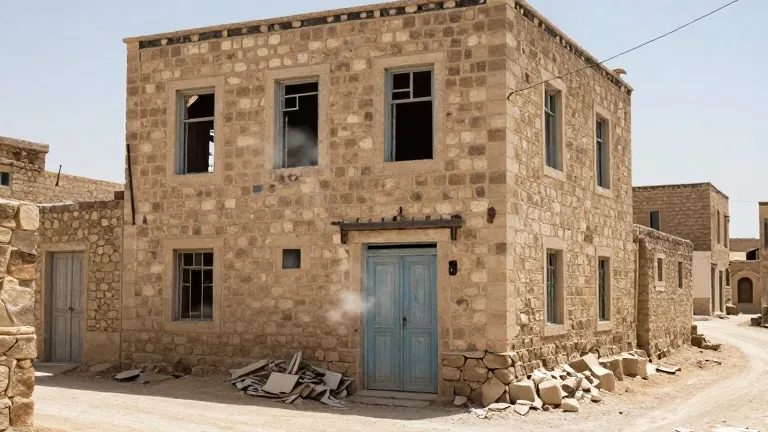
Güzelyurt Preserves Ancient Heritage
The town near Cappadocia maintains centuries of mixed religious sites and rural traditions despite population shifts.
By Thiago Kovalenko ·
Travel writer Rick Steves describes Güzelyurt, located 35 miles from Nevşehir in central Turkey, as a rare example of preserved cultural heritage in the region. The town sits at the edge of the Ihlara Valley and retains a low volume of tourism while maintaining a high density of historical sites.
Steves identifies Güzelyurt as a place where Greek, Turkish, Kurdish, and Bulgarian communities have coexisted. He notes that the town functions as a living repository of local traditions, with daily routines unchanged over centuries.
The town center features a bust of Mustafa Kemal Atatürk overlooking a market square. Residents gather there for tea and backgammon, activities that Steves observes as key social interactions for local men.
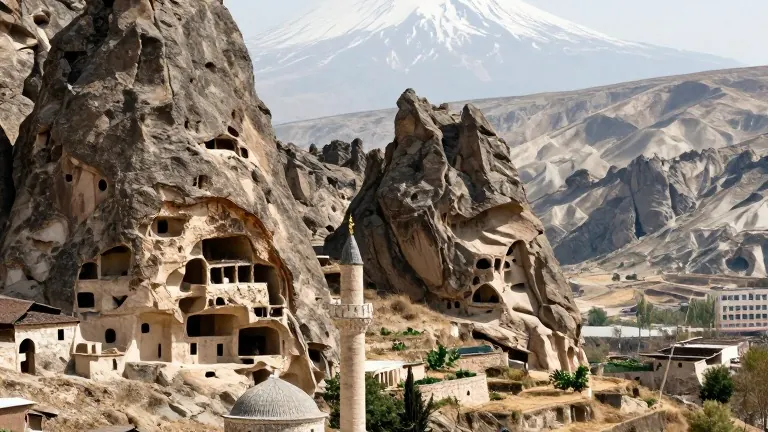
Below the modern town, the Ihlara Valley contains monasteries carved into volcanic cliffs by monks 1,600 years ago. Erosion has displaced many ancient residents, but some continue to live in the crumbling terraces and neglected gardens of the old settlement.
The former church of St. Gregorius, built in 385, now serves as a mosque with a single minaret. The conversion resulted from a population swap agreement between Greece and Turkey in the 1920s, which moved most Christians to Greece and Muslims to Turkey.
The gorge walls display a vertical history of architecture. The 1,600-year-old church foundation supports troglodyte caves, Seljuk arches, and Ottoman facades. Above these layers sits a 20th-century mosque with twin minarets and a tin dome.
Steves documents the continued use of eagle-bone flutes by local families. A father herds goats on the hillside while playing the instrument, allowing his wife and son at home to hear him. The family uses the music to signal safety and maintain connection across distance.
The town name Güzelyurt translates to “beautiful land.” White rocks on a nearby hillside spell out the name, visible against the backdrop of Mount Hasan’s snowy volcanic peaks.
Residents of the old town maintain their livelihoods through simple agricultural chores. They continue to inhabit the historic structures despite their deteriorating condition, prioritizing the community and its traditions over relocation.
Steves concludes that while outside visitors may view the town through a tourist lens, the locals define its beauty through their daily lives. They describe Güzelyurt as a place they would not leave, reinforcing its identity as a beautiful land.