China Telecom: 32 Nvidia B300 Chips Detected in State Network
Israeli firm Lava found 32 export-restricted GPUs in the Chinese state telecom operator's infrastructure, prompting Nvidia to call the breach a minor diversion.
By Jason Kovalenko ·
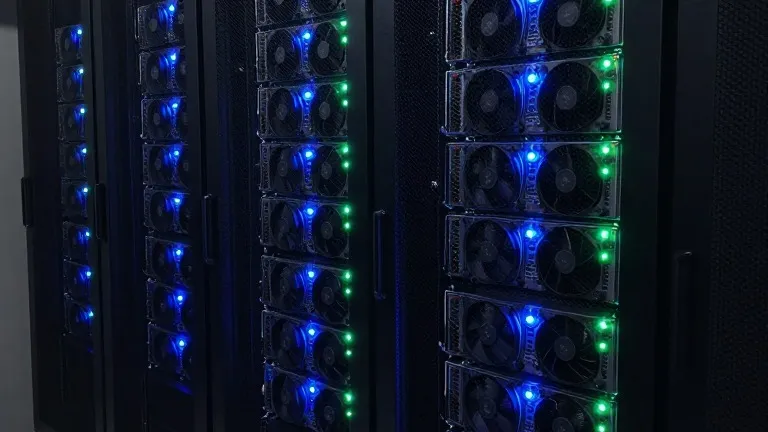
The U.S. Department of Commerce restricts the sale of advanced Nvidia graphics processing units to China without special authorization. Israeli security firm Lava reported on Thursday that it found 32 Nvidia Blackwell Ultra B300 chips running within the network of China Telecom, a state-owned telecommunications provider.
Nvidia announced the B300 GPU in March 2025. The chip offers 50% more memory and FP4 compute capability than its predecessor, the B200. The company marketed the hardware for large language models and complex reasoning tasks. The B300 series became a target for smuggling after a 2025 report indicated that Chinese companies had imported one billion dollars worth of Nvidia AI chips over a three-month period.
Lava detected the processors using Nvidia's DCGM Exporter software. This tool allows data center operators to monitor server health and performance. While intended for internal use, the software is often accessible from outside the network and does not always require a password. Lava confirmed the presence of the 32 units but stated it could not determine their exact physical location within China Telecom's infrastructure.
Nvidia did not dispute the findings. A company spokesperson told Tom's Hardware that the discovery represents an insignificant diversion of controlled products. The spokesperson noted that recent court cases have shown diversion rates below one-half of one percent. The firm argued that with tens of millions of GPUs in service in approved countries, smuggling is a nonfactor.
Enforcement efforts have intensified this year. In August 2026, prosecutors in Taiwan indicted nine individuals for the illegal export of B300 GPUs to China. These indictments followed an investigation by Supermicro, which fired several employees related to the smuggling scheme. The operation involved Flying Tiget Tech, a Taiwanese server trading firm that held whitelisted status for GPU purchases.
High demand for Nvidia silicon has driven up prices for older hardware. Servers built around the five-year-old A100 chip have tripled in value. Some buyers have retooled gaming GPUs to run AI workloads as they await access to newer models.
Nvidia is developing a tool to help locate its chips in the field. The company has not yet released this software. The 32 B300 chips found by Lava continue to operate in China Telecom's network.