43 million violations: Meta to pay New Mexico $25 billion
A judge capped the penalty at $25 billion after a jury found Meta misled users about data handling, a figure that is one-seventh of the company's current market value.
By Thiago Kovalenko ·
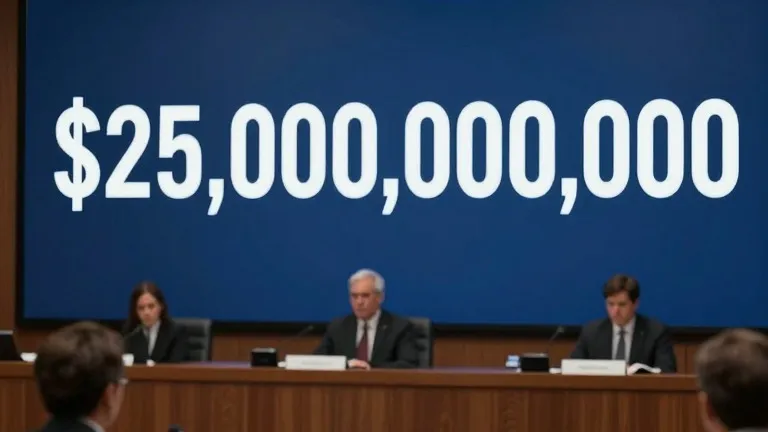
A New Mexico judge ordered Meta Platforms to pay $25 billion to the state on Wednesday. The amount reflects a jury verdict that found the company violated state consumer protection laws by lying to users about how their data was used. It is the largest fine the social media giant has ever faced in a U.S. court.
The legal battle began in 2021 when the state attorney general filed suit under the Unfair Practices Act. The complaint alleged that Meta misled users regarding data practices, an issue rooted in the Cambridge Analytica scandal. The state later expanded the case to include claims about content moderation policies. In September, a jury sided with the state, leading to the multibillion dollar penalty announced this week.
Meta has publicly rejected the outcome. C.J. Mahoney, the company’s chief legal officer, stated that the ruling makes it "all but impossible to do business in the state of New Mexico." He characterized the lawsuit as an effort to "impose a tax on speech" and expressed confidence that the company will win on appeal.
The $25 billion figure is the result of a specific calculation. The judge reduced a maximum potential penalty of $219 billion to this amount. The original maximum was based on $5,000 for each of 43 million violations. New Mexico attorneys had originally requested a penalty between $35 billion and $45 billion. Despite the size of the judgment, it remains a fraction of Meta's current market value of approximately $1.7 trillion.
This verdict is one of several legal defeats for Meta this year. Earlier in 2026, a New Mexico jury ordered the company to pay $375 million for violating the same law in a trial focused on child safety. A second phase of that case resulted in an additional $567 million order. In Los Angeles, a superior court ruled that Meta and YouTube harmed a young woman’s mental health through addictive design, awarding $6 million, most of which Meta must pay. In August, Meta settled a federal case with most U.S. states over features alleged to harm children, agreeing to pay between $17 billion and $18 billion over the next decade.
Legal experts suggest that financial penalties alone may not force immediate operational changes. Corban Rhodes, a partner at DiCello Levitt, the firm representing New Mexico, noted that each trial places evidence into the public record. He said the New Mexico trial put more than 100 exhibits on record, including material that had been kept secret for over a decade.
One such exhibit is a 2018 email from then-COO Sheryl Sandberg. Sent days after the Cambridge Analytica scandal broke, she wrote that the biggest issue was that "there were a MILLION developers with access to the data." She warned of "many, many, many more moments like this in the next month and year."
Pressure is also building from insurers and shareholders. In March, a Delaware judge ruled that insurers have no duty to defend Meta against thousands of lawsuits. Some experts argue insurers may now require responsible design as a condition for coverage. Brian Quinn, a Boston College law professor, said shareholders might demand that the company stop indemnifying individual directors and officers if they repeatedly appear in similar fact patterns. That would leave executives with less legal protection.
Meta’s shares fell on Thursday following the announcement. The drop reflected a mix of factors, including its earnings report, heavy spending on artificial intelligence, and a general slide in AI stocks. Rhodes expects the next wave of litigation to center on AI, noting that current regulators and courts have focused primarily on the effects of earlier social media eras.
More Business · Tech news · Rip-Off Report · Report a business · Got a Story?